The GP appointment
Should you have your hormones tested for hair loss?
Because thinning after children is hormonal, it seems obvious that measuring the hormones would tell you what is wrong. Mostly it does not, and knowing why saves you a private blood panel and a great deal of confusion.
Why hormone levels rarely explain pattern thinning
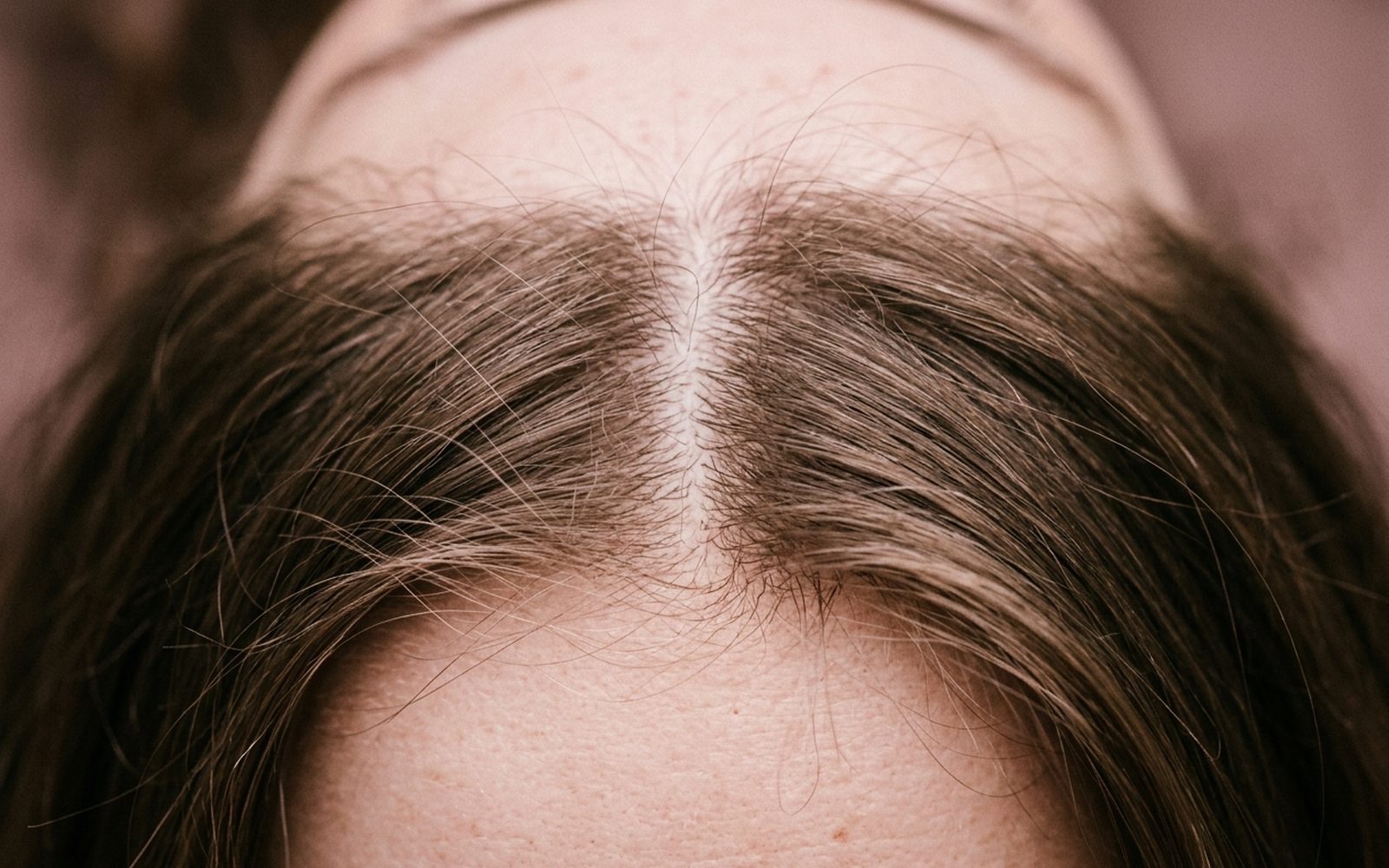
Pattern thinning at the temples, parting and crown is driven by how sensitive the follicle is to normal levels of androgen, not by abnormal levels in the blood. A woman with textbook female pattern loss will usually have normal testosterone, normal DHT and, if she is under 45, normal oestrogen. The blood test cannot see the receptor. A normal result does not mean the hair is not hormonal; it means the problem is local.
The tests, one by one
Total and free testosterone, SHBG, DHEA-S, androstenedione. Worth doing if there are other signs of androgen excess — excess facial or body hair, adult acne, irregular or absent periods, weight that will not shift. Together they point to PCOS or, rarely, an adrenal cause. Without those signs, they are usually normal and change nothing.
Oestradiol. Fluctuates enormously through the cycle and, in perimenopause, from week to week. A single reading tells you what your ovaries did that morning, not where you are in the transition. GPs will not diagnose perimenopause on it in women over 45, for good reason.
Not sure which one is you?
Take the two-minute hair quiz
Twelve quick questions. We tell you what we think is going on, what to do about it, and we say so if it is something we cannot help with.
Start the quiz →FSH. Rises as the ovaries wind down. Two raised readings six weeks apart in a woman under 45 support early perimenopause or premature ovarian insufficiency. Useful in that context; not otherwise.
AMH. A measure of ovarian reserve, used in fertility clinics. Falls with age. Tells you roughly how many eggs remain; tells you nothing about your hair.
Prolactin. Worth checking if you have stopped feeding but are still producing milk, have missed periods, or have headaches or visual disturbance alongside hair loss. Raised prolactin from a small pituitary growth is rare but real and very treatable.
Progesterone. Only meaningful on day 21 of a regular cycle, to confirm ovulation. No direct hair relevance.
Cortisol. A morning blood cortisol screens for rare adrenal disease, not for the everyday chronic stress that affects hair. Salivary cortisol profiles sold privately are of doubtful value.
The two that are worth having
Thyroid function with antibodies. Not a sex hormone, but the hormone test most likely to change what you do. More here.
An androgen panel if you have the signs. Because PCOS changes the treatment plan — anti-androgens, insulin resistance, contraception choice — and is under-diagnosed in mums who assumed the irregular periods were the baby.
The non-hormone tests that matter more
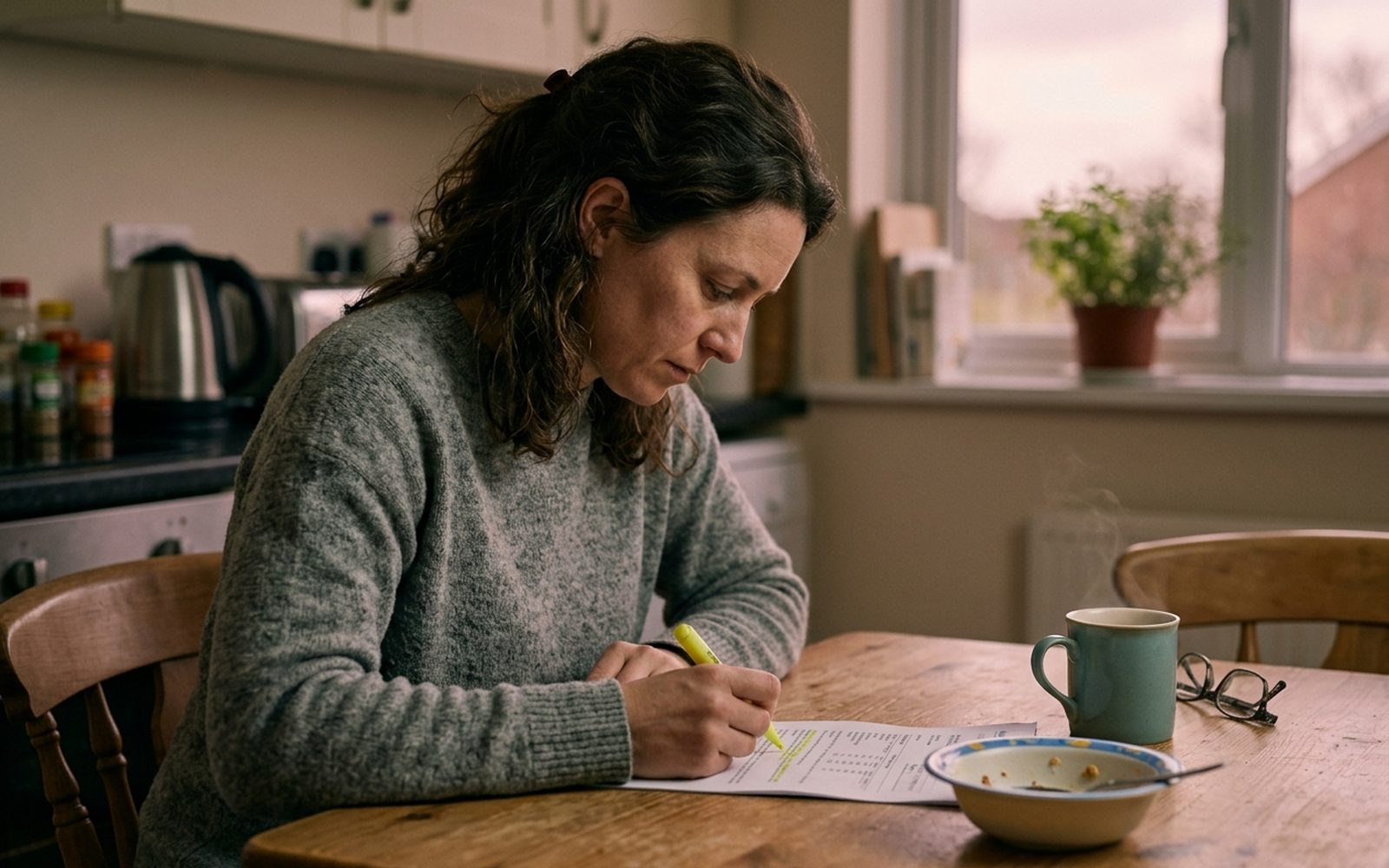
Ferritin, vitamin D, full blood count, B12 and folate. Between them they find the majority of the treatable causes of hair loss in mums. This is how to ask.
Where that leaves you
If the thyroid, iron and vitamin D are good, there are no signs of androgen excess, and the pattern is temples, parting and crown, you do not need a hormone panel to know what is happening. The hormones are doing what they do after children and through the late thirties; the follicle is responding to them locally; and the answer is local too. The DHT article explains the mechanism.
Ready to read your own pattern?
Take the two-minute hair quiz
Twelve questions. We tell you what we think is going on for you, and we say so if it is something a GP should see first.
Start the quiz →