Articles
Everything we’ve written, in the order to read it.
Start with the pattern you recognise. Each article stands alone, but together they make one argument: the problem is at the follicle, it has a mechanism, and the mechanism can be addressed.

Why your hair never fully came back after the baby
Everyone told you it grows back. For most of it, they were right. Here is what happened to the part that didn’t — and why waiting longer will not fix it.

Temples, parting, ponytail: what your hairline is telling you
Where the thinning shows up first is not random. Each pattern points to a slightly different thing happening at the follicle — and to what will and won’t help.

Iron, thyroid, vitamin D: the three blood tests worth asking your GP for
“Your bloods are normal” is not the same as “your bloods are good for hair”. What the standard panel measures, what it misses, and how to ask for what you need.
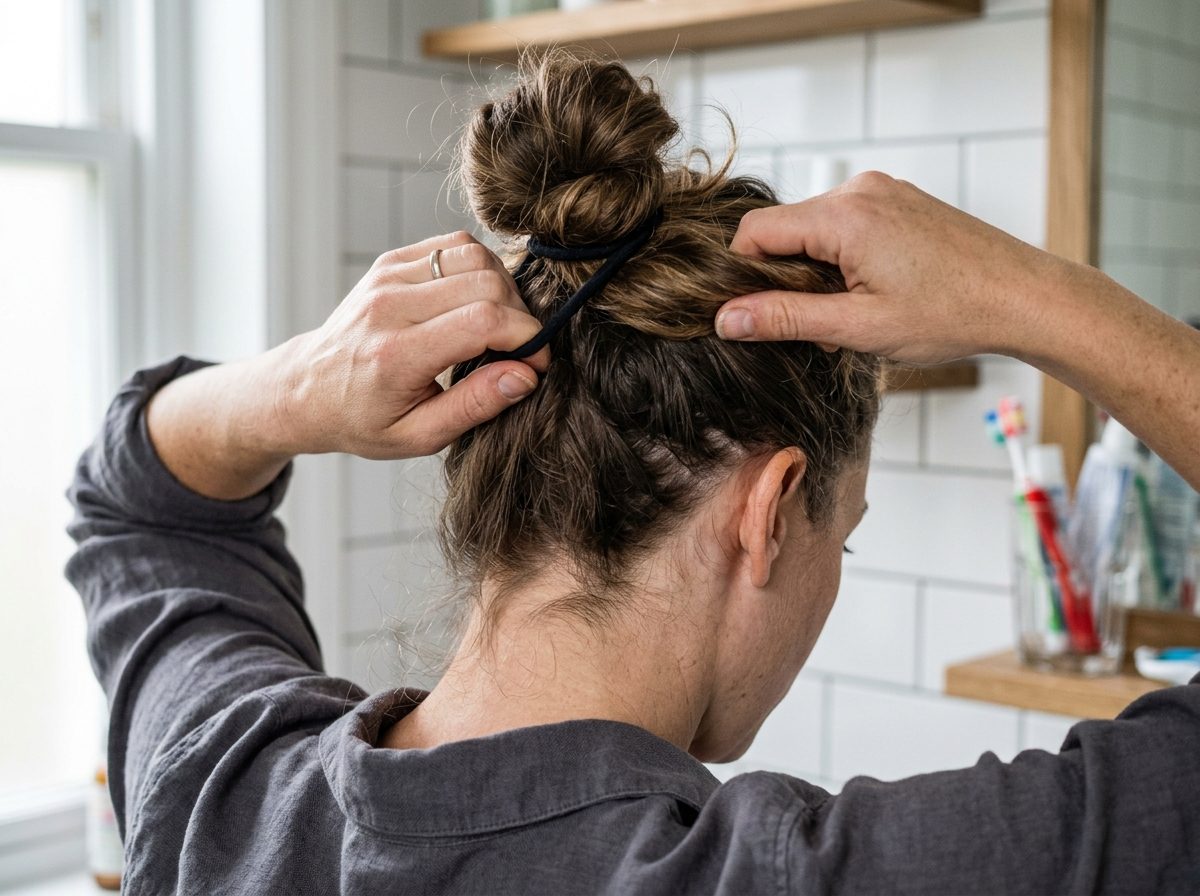
Is the mum bun making it worse?
The same hairstyle every morning for years, pulled tight with one hand while you find a shoe with the other. What traction actually does to the hairline — and what it doesn’t.

Perimenopause can start at 38 — and hair is usually the first thing to notice
You were told it was a fifty-something problem. For a lot of women the hormonal decline begins a decade earlier, and the follicle notices long before the hot flushes do.

Why the shampoos, the gummies and the roller did nothing
You did not fail to try. You tried the wrong category of thing. An honest breakdown of what each one can and cannot reach.
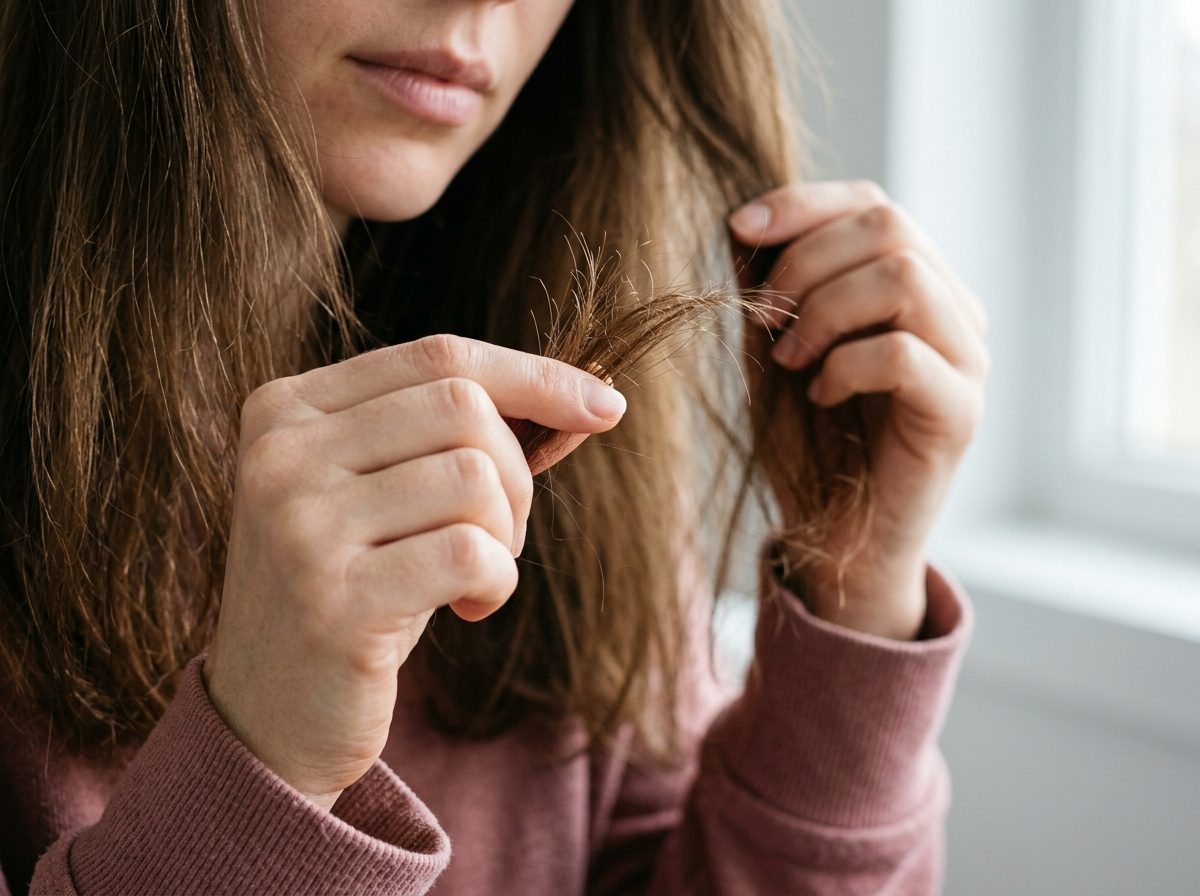
Dry, straw-like hair after children is a follicle problem, not a conditioner problem
If nothing softens it any more, the fibre itself has changed. Where texture change comes from, and why it belongs with thinning rather than with haircare.
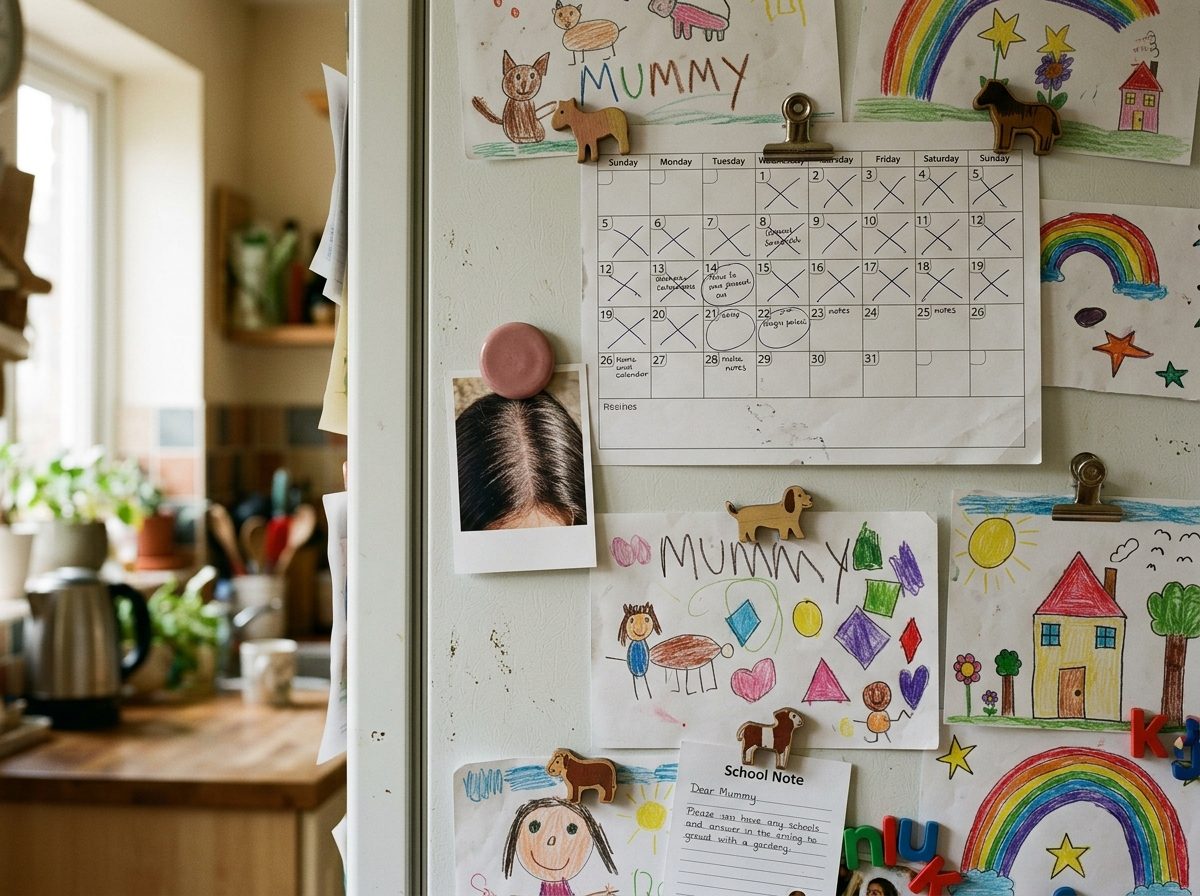
What to actually expect in twelve weeks
Hair biology is slow and nobody selling you something will say so. A realistic timeline for what changes first, what changes last, and how to photograph it so you can see it.

Weaning, and the second shed nobody mentions
You got through the postnatal shed. Then you stopped feeding, and it started again. Why the hormones move twice, and how to tell a normal second shed from something that needs attention.
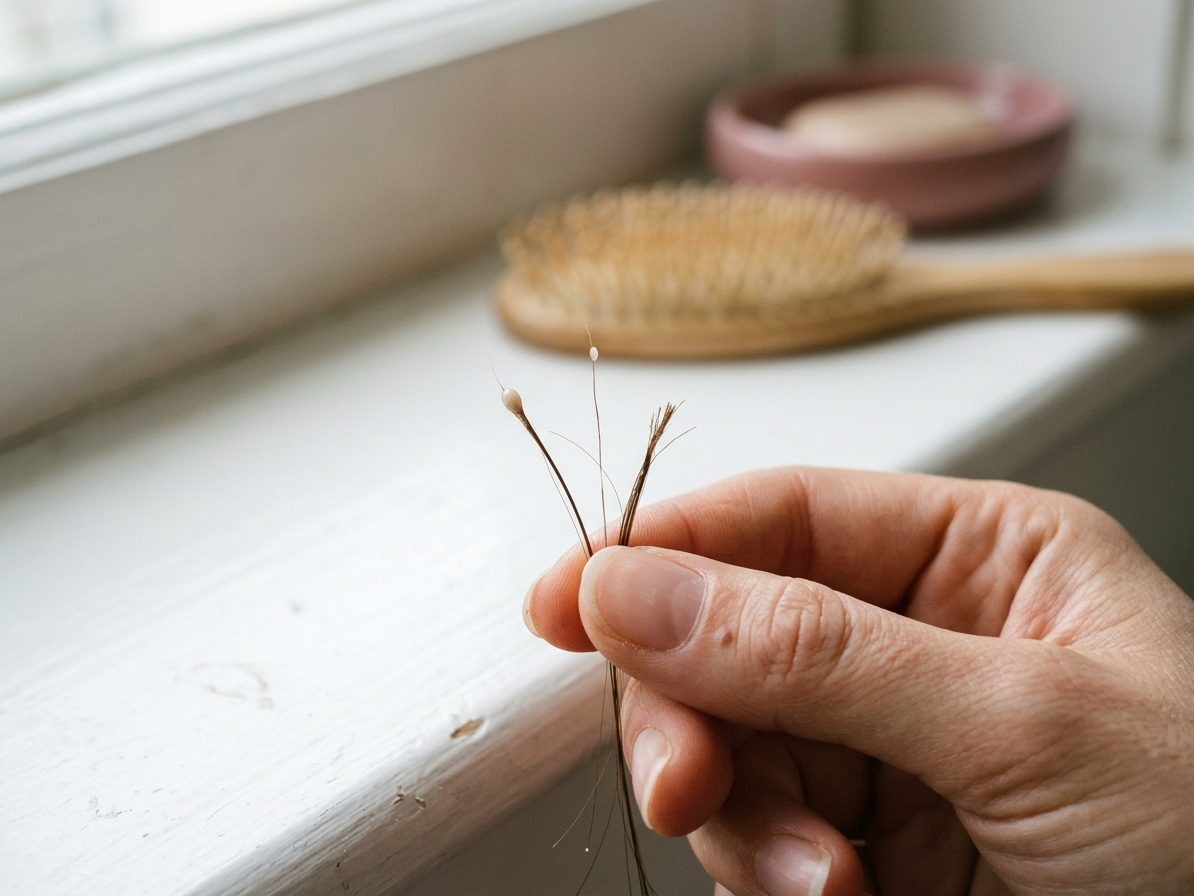
Breakage or shedding? The thirty-second test
They look the same in the plughole and have almost nothing in common. One is a styling problem; the other is a follicle problem. Here is how to tell which you have before you spend anything.

Running on empty: what sleep loss and cortisol do to the follicle
“Reduce your stress” is the least useful advice a mum can be given. Here is what stress actually does to a follicle, why it hits hair months later, and what genuinely helps when the stress is not going anywhere.

What a trichologist actually checks — and how to do it at home
Four checks that take five minutes once a month. They tell you whether it is getting worse, whether something is working, and what to show a GP.

The fine hairs at your hairline: regrowth or breakage?
That halo of short hairs standing up at the front can be the best news you have had all year or a sign of damage. They look identical from a distance. Up close they are not.

The honest product guide: what is worth your money at each stage
Five rules for judging any hair product, an explanation of why we recommend what we do, and a plain statement of what nothing can do.

Colouring thinning hair: what to ask for, what to avoid, and why the roots matter most
Colour can be the best cover a thinning parting has, or the thing that turns fine hair into breakage. The difference is almost entirely in what you ask for at the basin.

Hard water, chlorine and the Saturday swimming lesson
Most of England and a good part of Wales runs on hard water. If your hair went dull, rough and stiff after you moved house, or after the kids started swimming, the plumbing may be the reason.
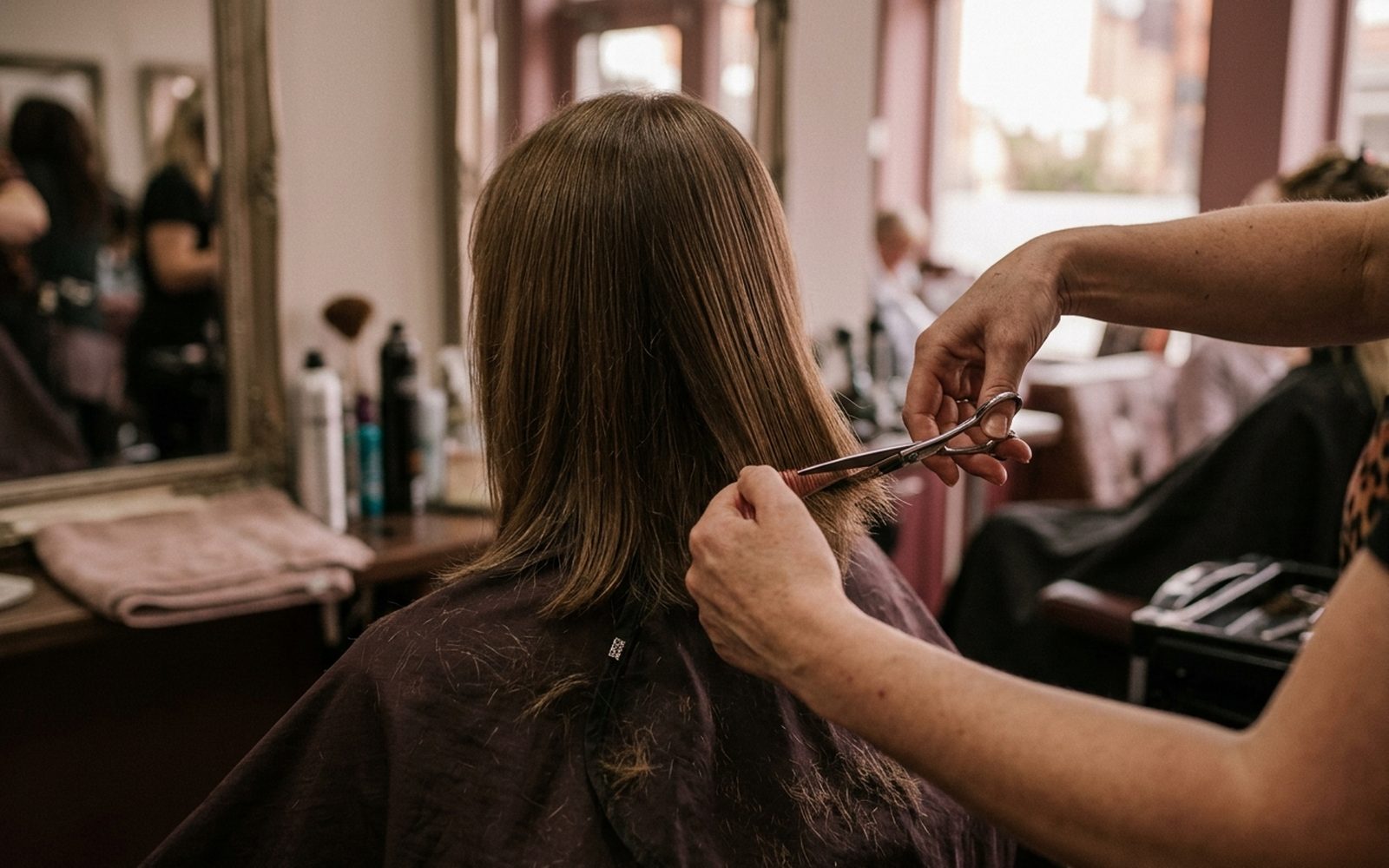
The haircut that makes thin hair look thicker (and the three that make it look worse)
A good cut will not grow a single new hair, but it can make the hair you have look like twice as much. What to ask for, what to refuse, and how to describe the problem to a hairdresser.

The pill, the coil, the implant: what contraception does to your hair
Hormonal contraception changes the hormonal weather at the follicle. Some methods help thinning hair, some make it worse, and swapping between them causes a shed that is almost never explained.

The thyroid problem that shows up after a baby — and gets missed
Around one in twenty women develop a thyroid problem in the year after giving birth. It causes exhaustion, low mood and hair loss, and it is routinely put down to being a new mum.

PCOS, hair and the years after children
Polycystic ovary syndrome affects around one in ten women, and its signature on the head is the temple-and-crown pattern, often worsening after pregnancy. What is going on, and what actually helps.

Hair loss after rapid weight loss, and the injection question
Lose more than a stone quickly — by diet, surgery or a GLP-1 injection — and a shed follows two to three months later. Why, how long it lasts, and what to do so it does not become permanent.
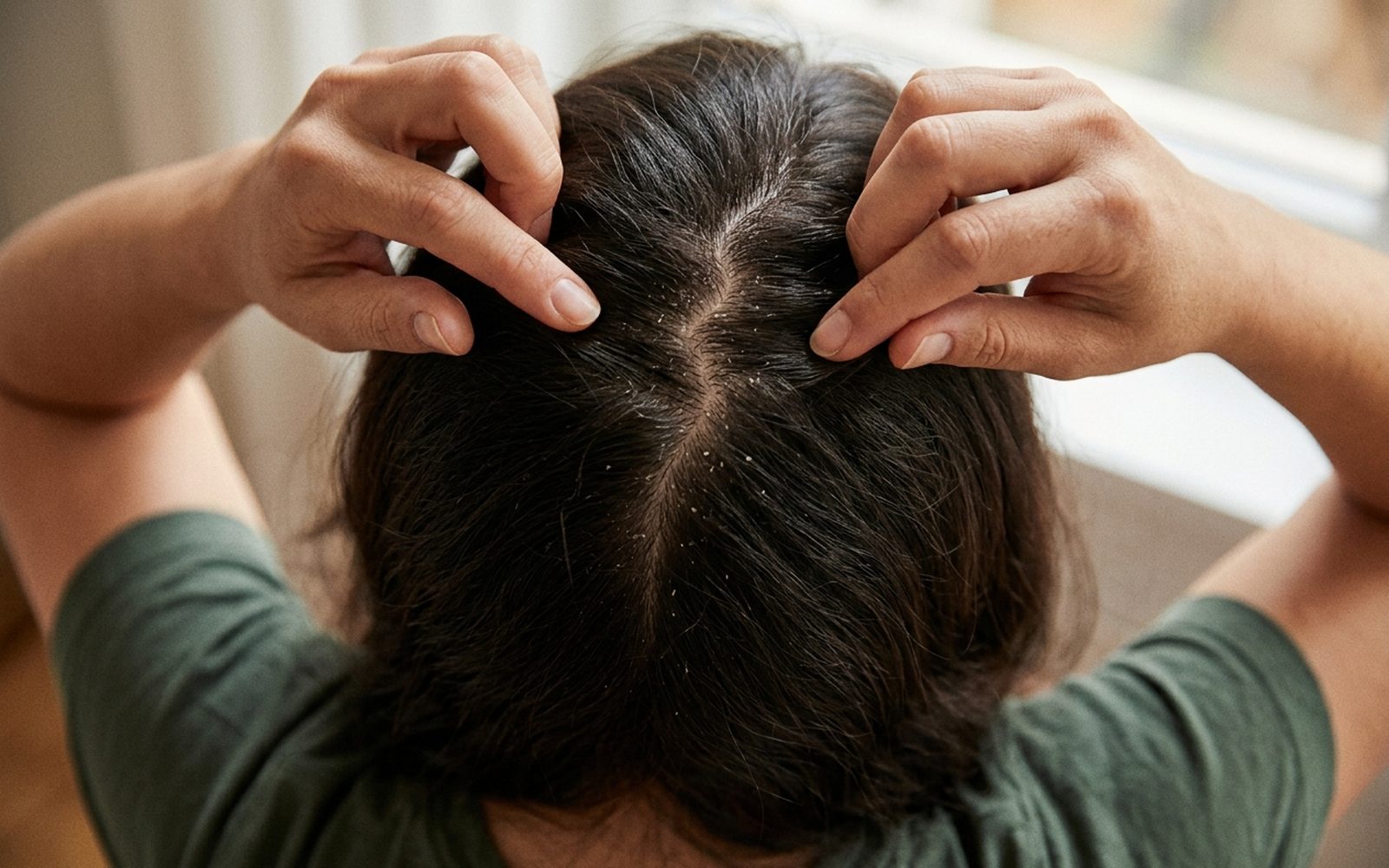
The itchy, flaky scalp: a plain guide to what it is and what to do
Dandruff, dry scalp, seborrhoeic dermatitis, psoriasis and product build-up all itch and all flake. They need different things. How to tell which is which, and why it matters for regrowth.

Eating for hair when you are living on the kids’ leftovers
A mum’s diet is, very often, crusts, cold pasta and whatever is left on a plastic plate. The follicle notices. What it actually needs, and how to get it without cooking a separate meal.

The dry shampoo habit: how much is too much, and what it is doing to your scalp
Dry shampoo has kept a generation of mums presentable on four hours’ sleep. Used the way most of us use it, it is also quietly clogging the scalp, and it is a common hidden cause of itch, flakes and slow regrowth.

Second pregnancy, second shed: why the hair copes worse the second time
The first postnatal shed was frightening but it grew back. The second one, two or three years later, is often smaller and never quite recovers. That is not bad luck. It is arithmetic.

Raising ferritin properly: the supplement mistakes that keep mums low for years
You were told your iron was low, you took the tablets, they upset your stomach, you stopped. Two years on, the hair is still thin. Here is how to do it so it actually works.

The styles that protect a thinning hairline (and still survive a toddler)
You cannot wear your hair down with a two-year-old. You can stop the way it goes up from making the corners worse. Six styles that hold, and the two rules that matter more than the style.

HRT and hair: what it does, what it doesn’t, and the progestogen question
More women in their forties are starting HRT, often for hair among other things. It can help, it can do nothing, and one common formulation can make thinning worse. Here is how to think about it.

Hair while breastfeeding: what is safe to use, and what to expect when you stop
Feeding delays the postnatal shed, changes its shape, and rules out some treatments. What is happening, which products are fine, and how to prepare for the weaning drop.
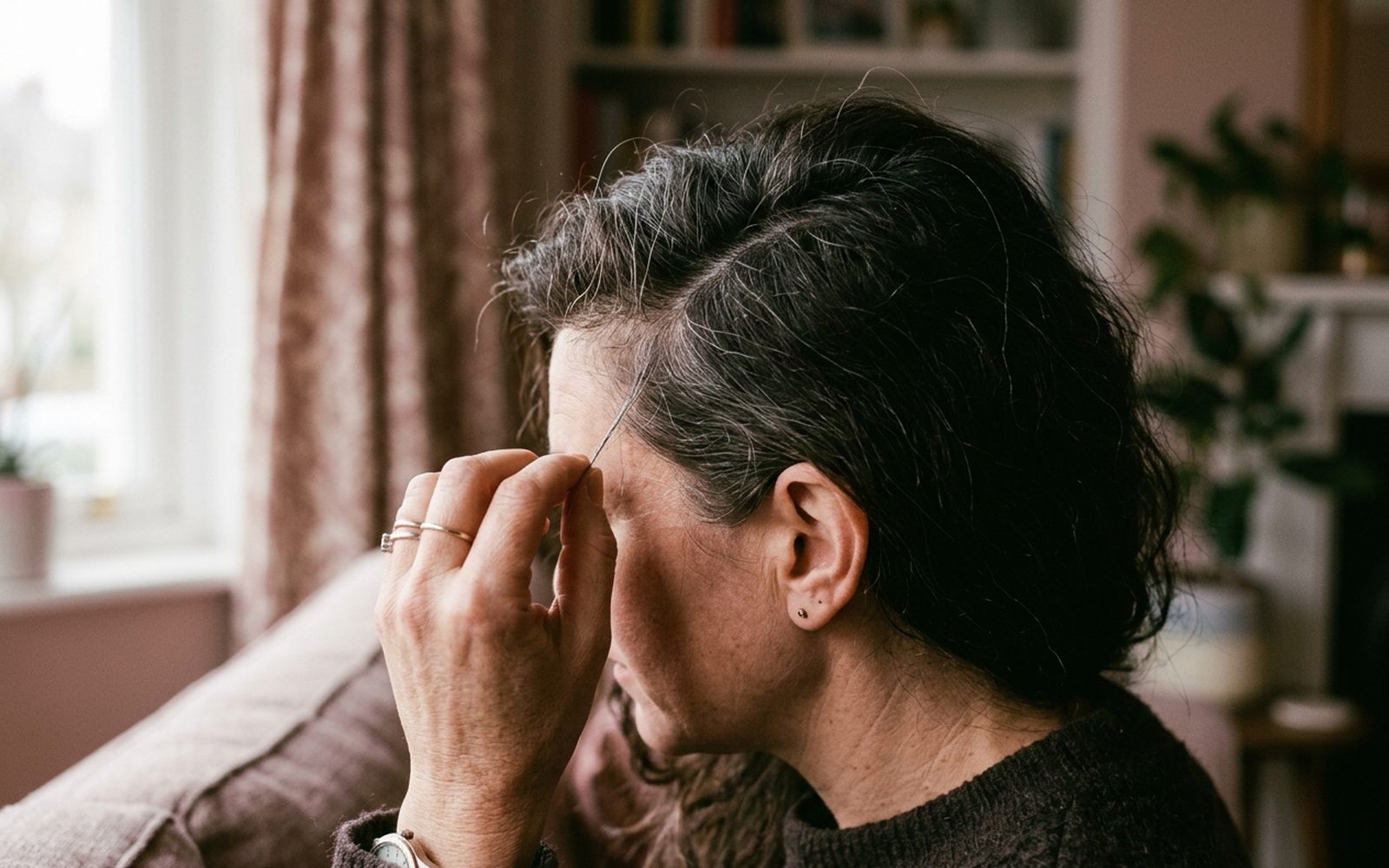
Grey hair after children: why it arrives with the thinning, and what to do about the texture
The first greys often show up in the same years, and the same places, as the thinning — and grey hair is wirier, drier and harder to manage. What is going on, and how to look after both at once.

Antidepressants, anxiety medication and hair: the side effect nobody mentioned
One in ten mums is on an SSRI. Hair thinning is a listed side effect of most of them, it starts months after the first tablet, and it is usually mistaken for something else. What is known, and what to do without stopping.
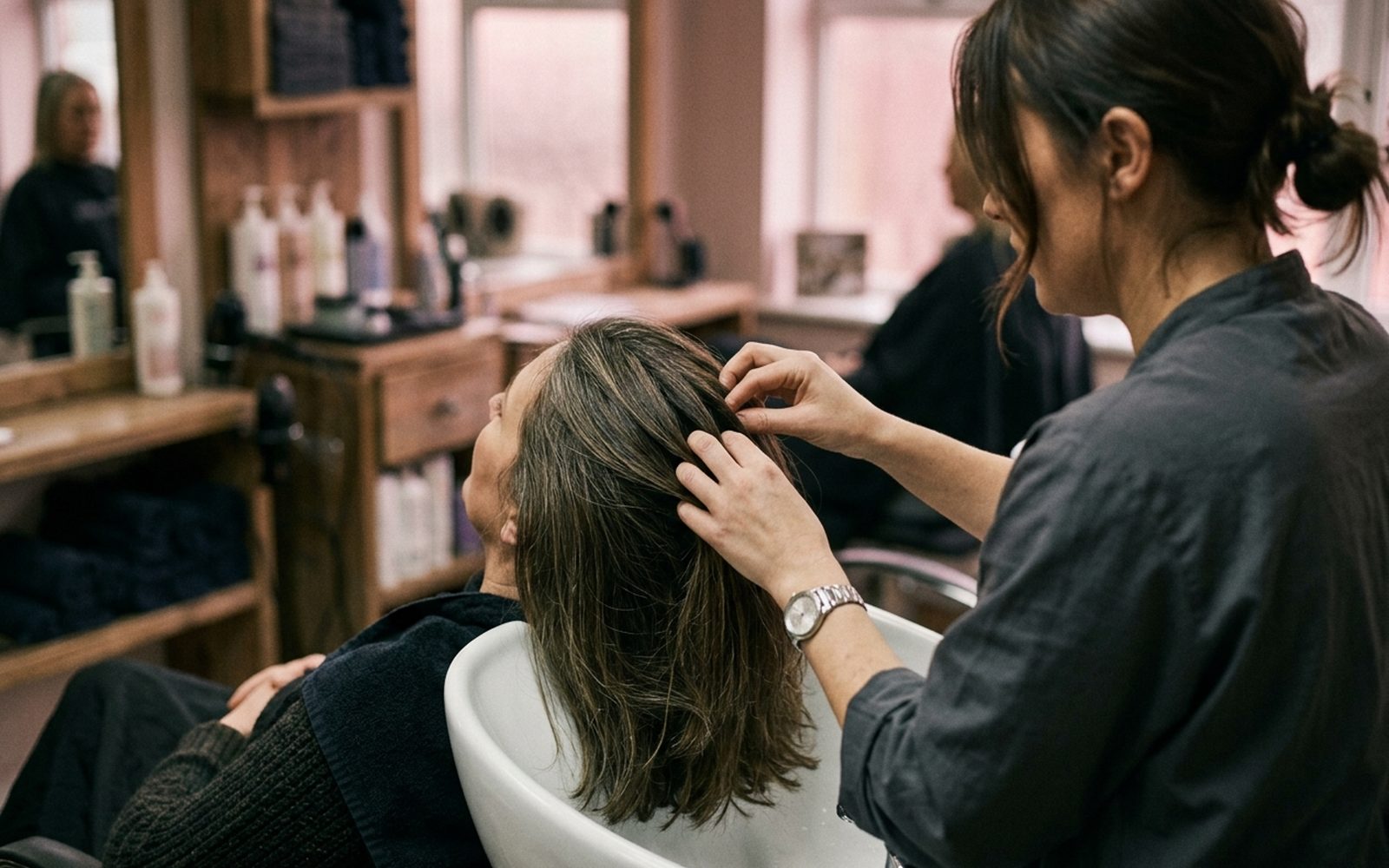
How to talk to your hairdresser about thinning without dying of embarrassment
Your hairdresser can see your scalp better than you can, has seen hundreds of others, and is usually too polite to mention it. The five questions to ask, and how to use what they tell you.

The photo from four years ago: how to tell whether it is really thinner
You are not sure. Some days it looks fine; some days it looks terrible. Before you spend anything, here is how to get a real answer using photos you already have.

The wash-day routine for thinning hair: what to change, in what order
Most of what is sold for thinning hair is haircare, and haircare does not regrow hair. But a bad routine breaks the hair you have. Here is the one that does no harm, from the tap to the pillow.

Vitamin D and hair: why the UK winter is a hair problem
From October to March the sun in Britain is too low to make vitamin D in your skin, and the follicle uses it to start a new cycle. What the deficiency looks like, how to test, and how much to take.
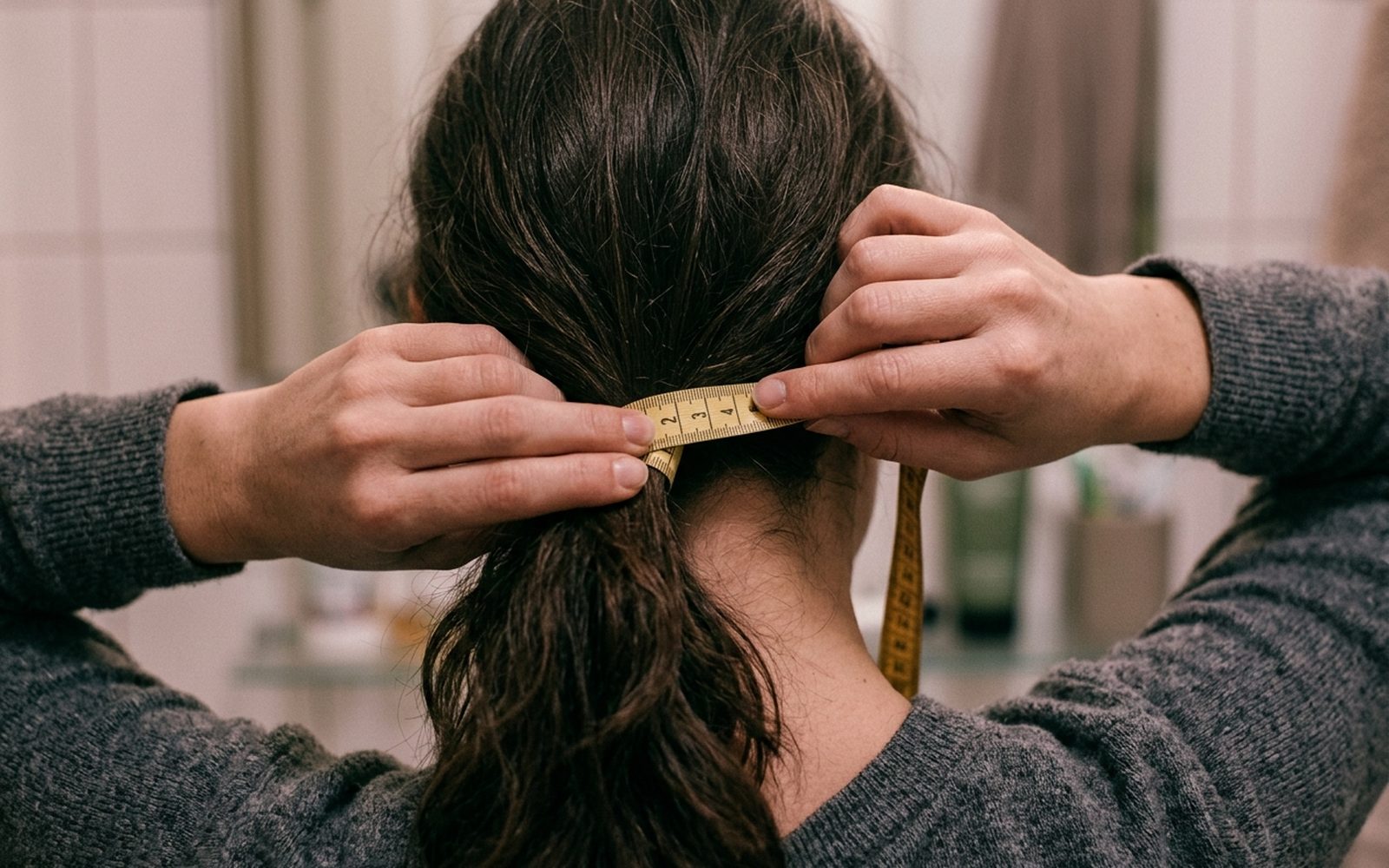
The ponytail test: the one measurement that tells you the truth
Mirrors lie, lighting lies, and everyone you ask is being kind. A soft tape measure and a monthly number will tell you, within a few months, whether it is getting worse, stable, or coming back.

Receding corners: is it the ponytail or the hormones?
A thinning temple from years of tight styles and a thinning temple from androgen sensitivity look the same in the mirror. They need opposite things. Here is how to tell them apart in two minutes.

Hair on four hours’ sleep: what broken nights do, and what helps when sleep isn’t coming back
“Sleep more” is not advice a mum can take. What sleep deprivation actually does to the follicle, why the damage arrives months later, and the five things that reduce it when the nights are what they are.

Thinning at the crown: the patch you cannot see and everyone else can
You only found it in a changing-room mirror or a photo from behind. Why the crown thins later than the temples and parting, what it tells you, and why it is the pattern most often left too long.
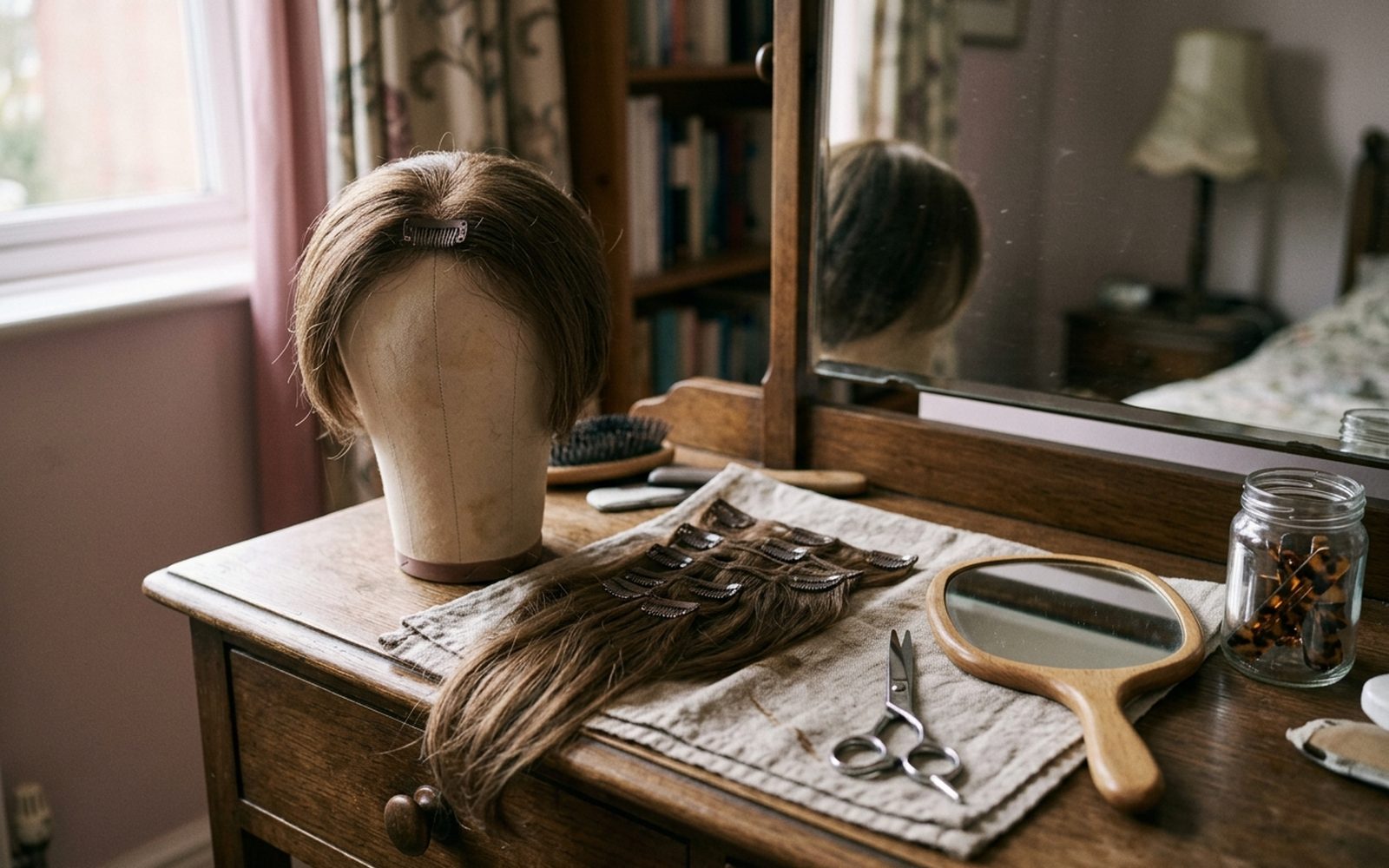
Toppers, extensions and fibres: the honest guide to covering thinning while you treat it
There is no shame in cover. There is a lot of bad advice about it. Which options help thinning hair, which make it worse, and how to use them without losing the hair underneath.

Coffee, wine and the follicle: what the three o’clock latte and the nine o’clock glass actually do
Caffeine is in half the hair products on the shelf and alcohol is in half the mums at the school gate. What each one does to hair, and where the line is.
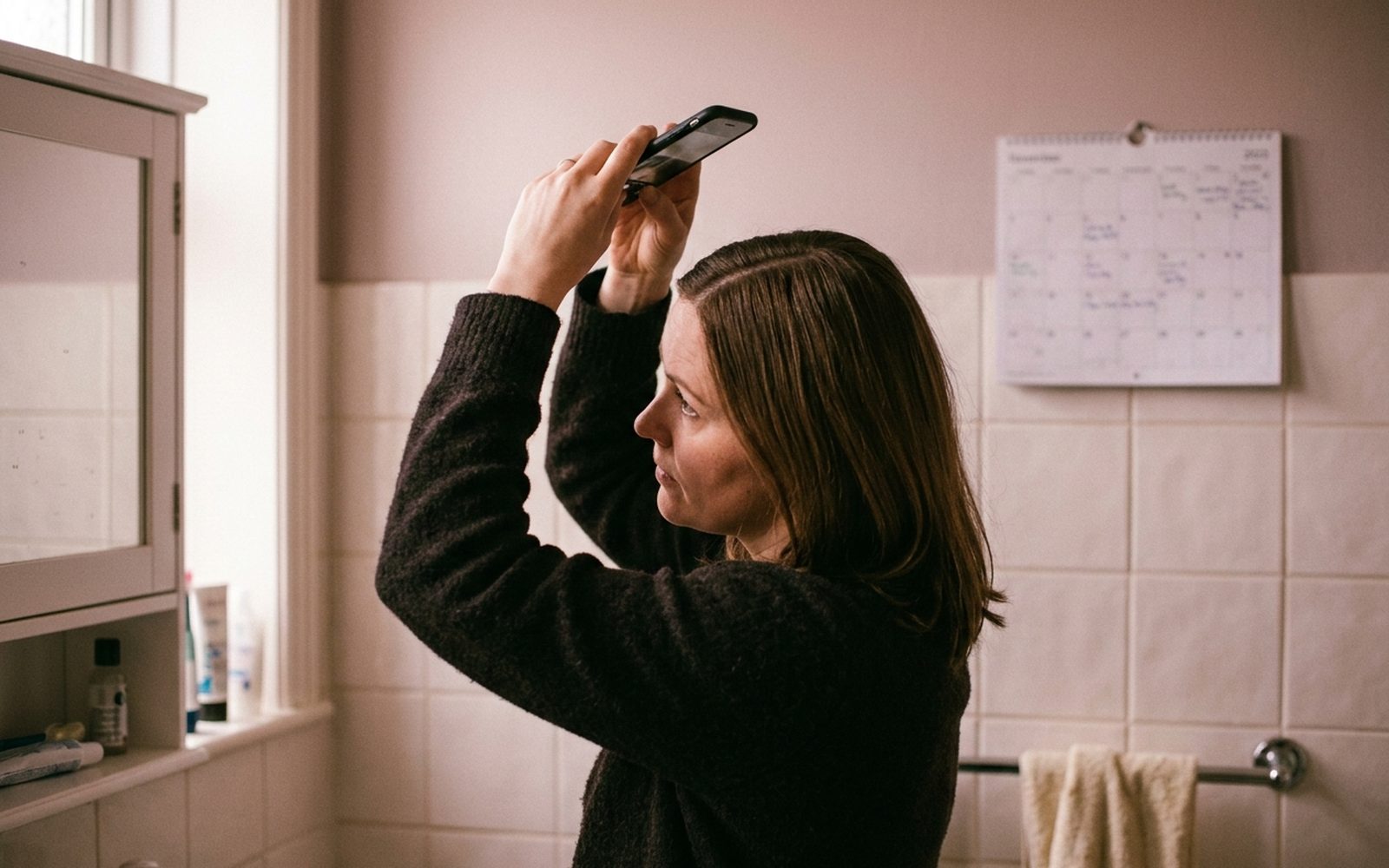
The photo protocol: how to photograph your hair so you can actually see what is changing
Every trichologist uses standardised photographs, because looking is unreliable. Here is the exact method — angles, light, timing — so that in three months you will know, rather than feel.

When the GP says it’s normal: what to do next
You went, you were brave enough to ask, and you were told it was your age, or the baby, or stress, and that your bloods were fine. You are not wrong to feel dismissed. Here is how to use that appointment anyway.

C-sections, blood loss and hair: the birth itself can be the reason
A difficult birth, a caesarean, a haemorrhage or a long labour puts the body through a physical shock that shows up in the hair months later — on top of the ordinary postnatal shed. What to check, and why it matters two years on.
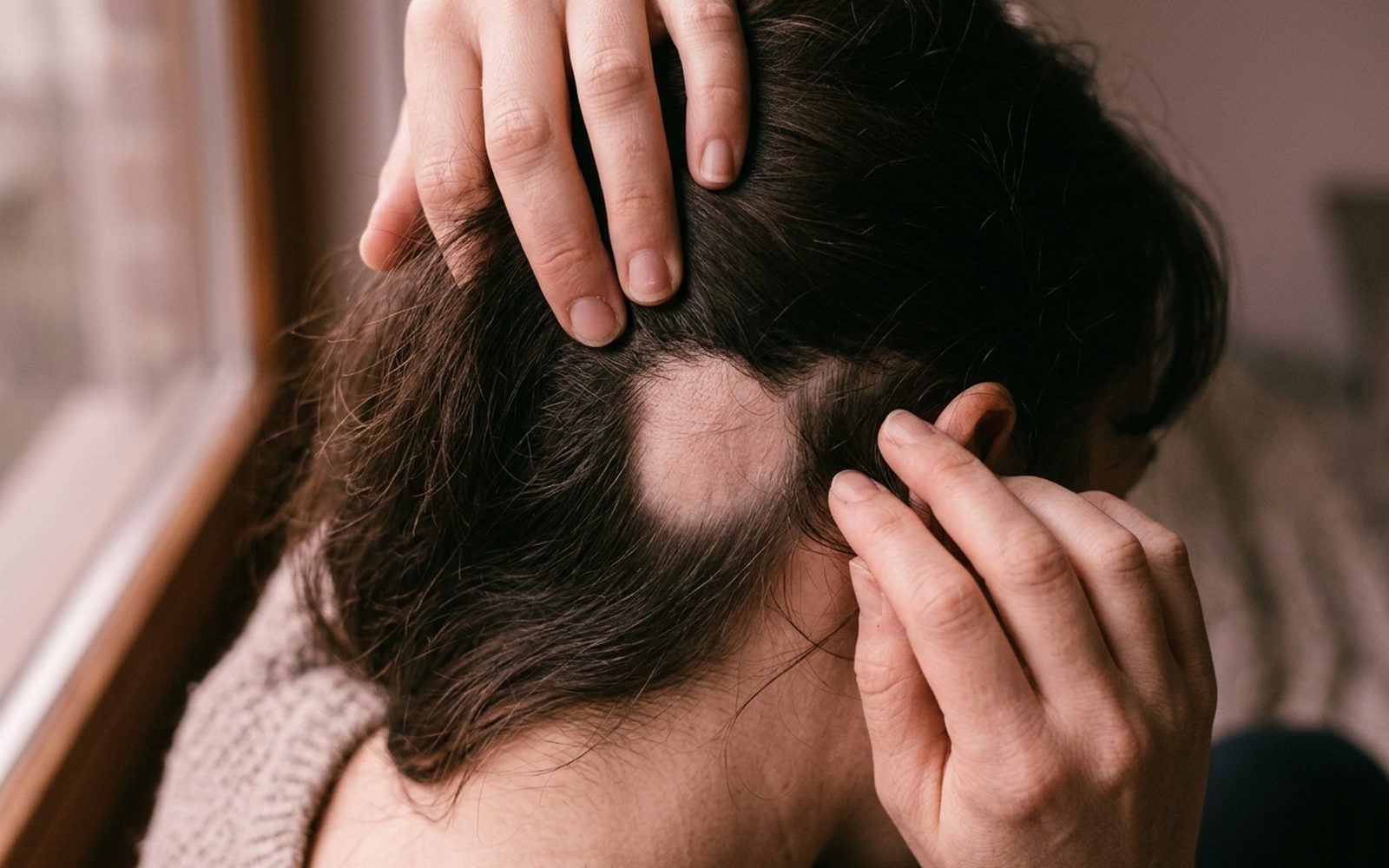
The coin-sized patch: alopecia areata, and why it needs a GP not a serum
A smooth, round bald patch that appeared over a few weeks is a different condition from everything else on this site. It is common after pregnancy, it is treatable, and the treatment is not on a shelf.

The hairline that moves back evenly, and the eyebrows that go with it
Frontal fibrosing alopecia is rare, rising, and often mistaken for ordinary thinning for years. Because it scars, those years matter. The signs that should send you to a dermatologist rather than a shelf.

The heat rules: straighteners, dryers and thinning hair
Heat does not touch the follicle, but it snaps the fine hair a struggling follicle produces, and on a thinning head every broken hair shows. The temperatures, the tools and the habits that make the difference.

The school-run photograph: why you look thinner in photos than in the mirror
The mirror shows you from the front, in soft light, at eye level, and you have arranged your hair for it. The photo is taken from above, in daylight, by someone who has not. Which one is right?

Minoxidil for women: the honest guide before you start
It is the one hair-loss treatment with decades of evidence, and most women who try it stop within a year. Both things are true. What it does, the shed on starting, the rebound on stopping, and who it suits.

Hair supplements: what the evidence says about each one
Biotin, collagen, saw palmetto, the “hair, skin and nails” gummies, and the ones with a doctor on the box. Which have evidence, which are harmless, and which are quietly making things worse.

Does scalp massage actually work? What the one real study found
It is free, it feels good and it is all over social media. There is one proper study. It found something, and it found that it took longer than anyone advertises.

Hair loss three months after the flu, Covid or a bad winter bug
Everyone in the house had it in January. In April the hair started coming out. A high fever or a proper illness triggers a shed on a fixed delay — here is the timeline, and how to tell it from something that will not stop.

Talking to your partner and your kids about your hair
Most mums carry this on their own. The partner has not noticed, or has noticed and said nothing, and the children say what they see. A few ways to have the conversation that make the next year easier.

When it is the immune system: autoimmune hair loss in the years after a baby
Pregnancy switches the immune system down; the birth switches it back up, and sometimes it comes back angry. Thyroid, alopecia areata, lupus and the others — how they show up in hair, and the symptoms that mean you should be tested.

Rosemary oil: what the study everyone quotes actually found
One trial, from 2015, is the basis for the whole trend. It is a real study and it found something. It also had limitations that the videos leave out. Here is the honest version, and how to use rosemary if you want to.
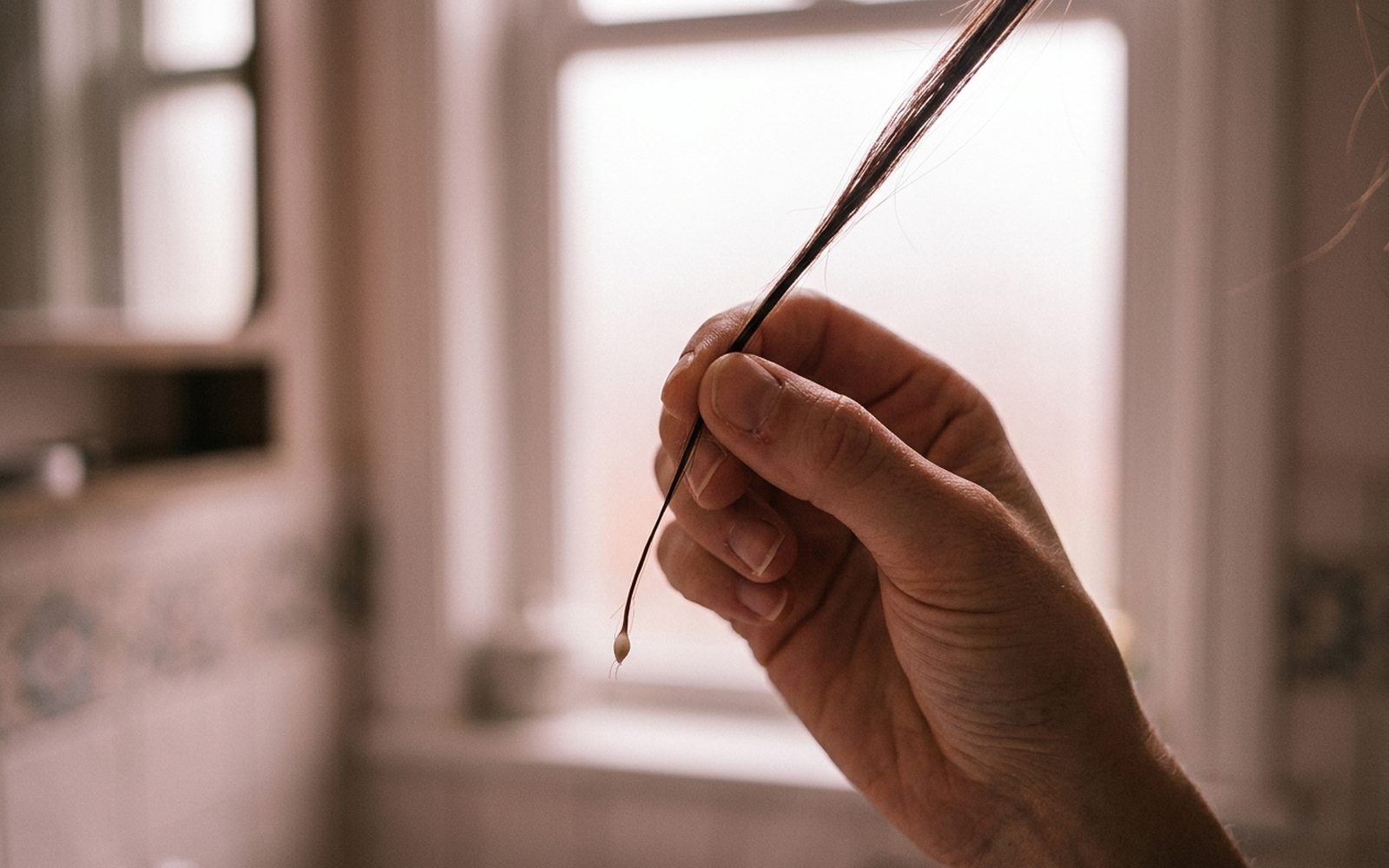
The hair cycle in plain English: why everything about hair takes three months
Every follicle runs on a cycle of growing, resting and releasing. Once you understand it, the three-month delay behind every shed, the twelve-week wait for every treatment, and the reason a follicle can be alive and producing nothing all make sense.
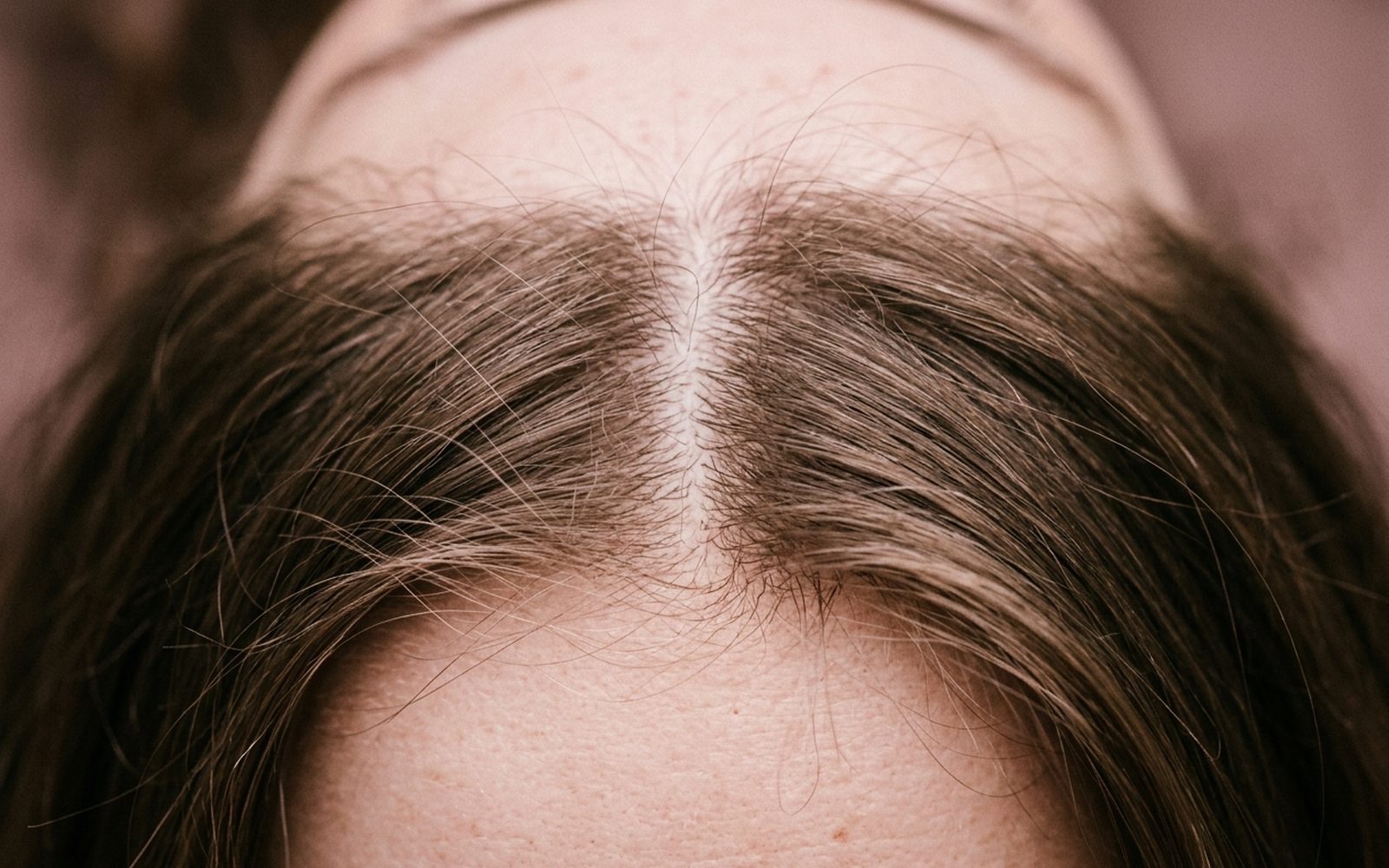
What DHT actually is, and why it picks on the temples
The hormone behind most thinning after children is named in every product advert and explained in almost none. What it is, where it comes from, why some follicles are sensitive and others not, and what can and cannot be done about it.
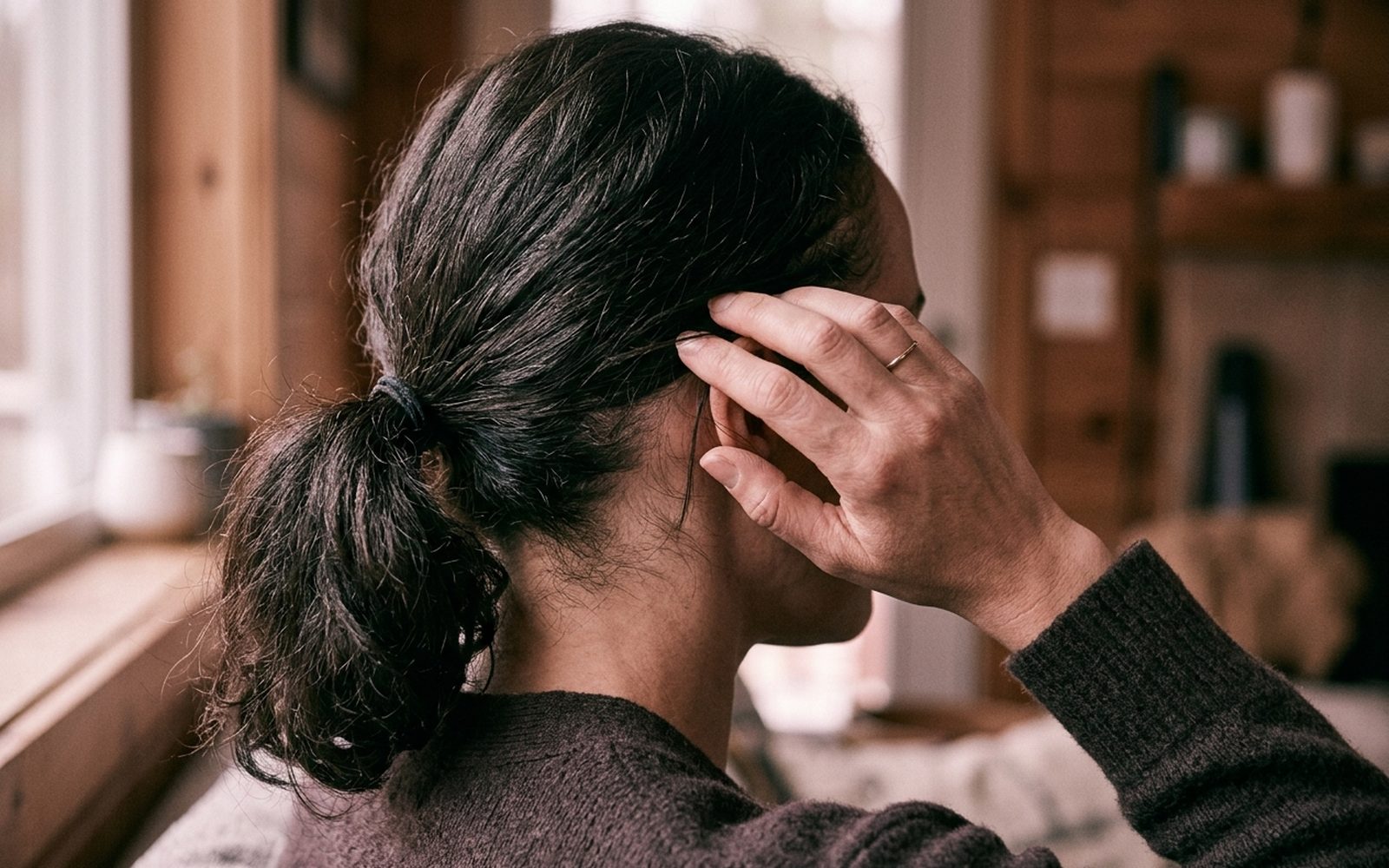
Why one side is thinner than the other
Hormonal thinning is usually symmetrical. If your left temple is worse than your right, or the parting only shows on one side, the asymmetry is a clue, and it usually points to something you are doing rather than something you are.

Should you have your hormones tested for hair loss?
Oestrogen, testosterone, FSH, AMH, DHEA, prolactin: the tests women ask for, what each one can and cannot tell you about your hair, and the two that are actually worth having.

Hair loss after miscarriage or stillbirth
A loss triggers the same hormonal drop as a birth, and the same shed follows, at a time when nobody is looking after you and there is no baby to explain it. What is happening, what is normal, and what you are allowed to do about it.

IVF, fertility drugs and hair: the shed that comes with the treatment
Stimulation drugs push oestrogen to levels far above a natural cycle and then drop it to nothing. Hair notices. What each stage of treatment does, what to expect after a failed or successful cycle, and what is safe to use.

Hair after fifty: what changes when the hormones stop changing
Once periods have stopped for a year the hormonal turbulence is over, and the hair settles into its new state. For many women that state is thinner, drier and slower. What is different after menopause, and what still works.

Sweat, the gym and thinning hair: how to exercise without paying for it in hair
Exercise is good for the follicle — it lowers cortisol and insulin and improves blood flow. The way most mums fit it in, with the same tight ponytail and no wash afterwards, is not. The rules that let you keep both.

Summer, sun cream and the holiday hair problem
Sun on a thinning parting burns, salt and sun dry an already fragile fibre, and the September shed is real. How to protect thinning hair on holiday without a wide-brimmed hat you will never wear.
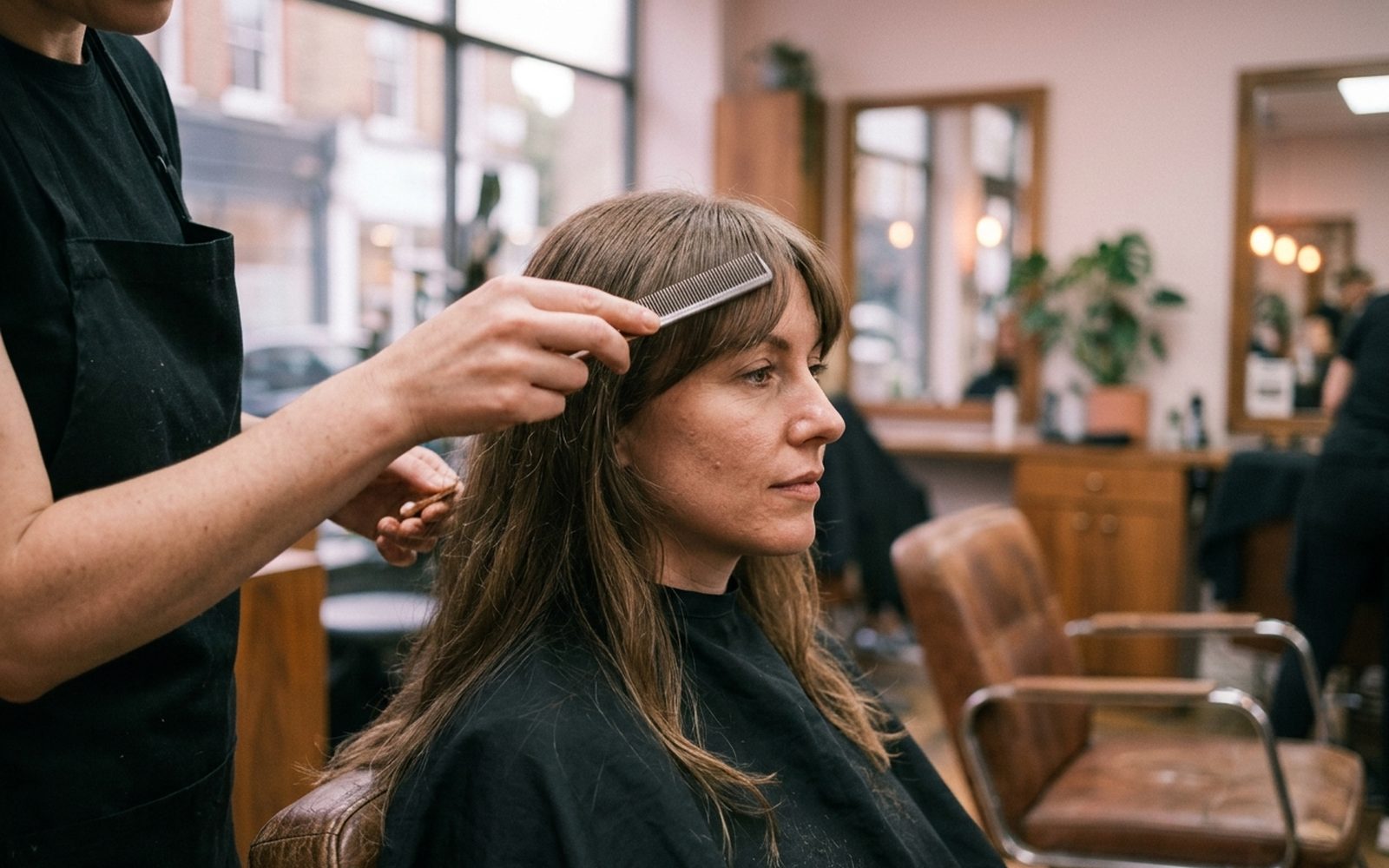
Fringe or no fringe: the decision, made properly
A fringe is the most effective disguise a thinning hairline has, and the most-regretted haircut in Britain. Which kind suits which problem, who should not, and how to trial one without cutting anything.

Brushing and detangling fine hair without losing half of it
The hair you see in the brush is mostly hair that was already released — but some of it was not, and on fine hair the wrong brush and the wrong technique account for a surprising share of what ends up on the bathroom floor.

Coming off the pill to conceive: the shed that arrives with the trying
You stopped the pill, the periods came back, and three months later so did the hair — in the brush. Why stopping contraception triggers a shed, what it says about your follicles, and why it matters for the pregnancy you are planning.

Sugar, insulin and the follicle: the biscuit tin and the parting
Insulin resistance raises the androgens that thin the parting, and a mum’s diet of crusts, biscuits and three coffees is a recipe for it. What insulin does to hair, who is affected, and the four changes that move it.
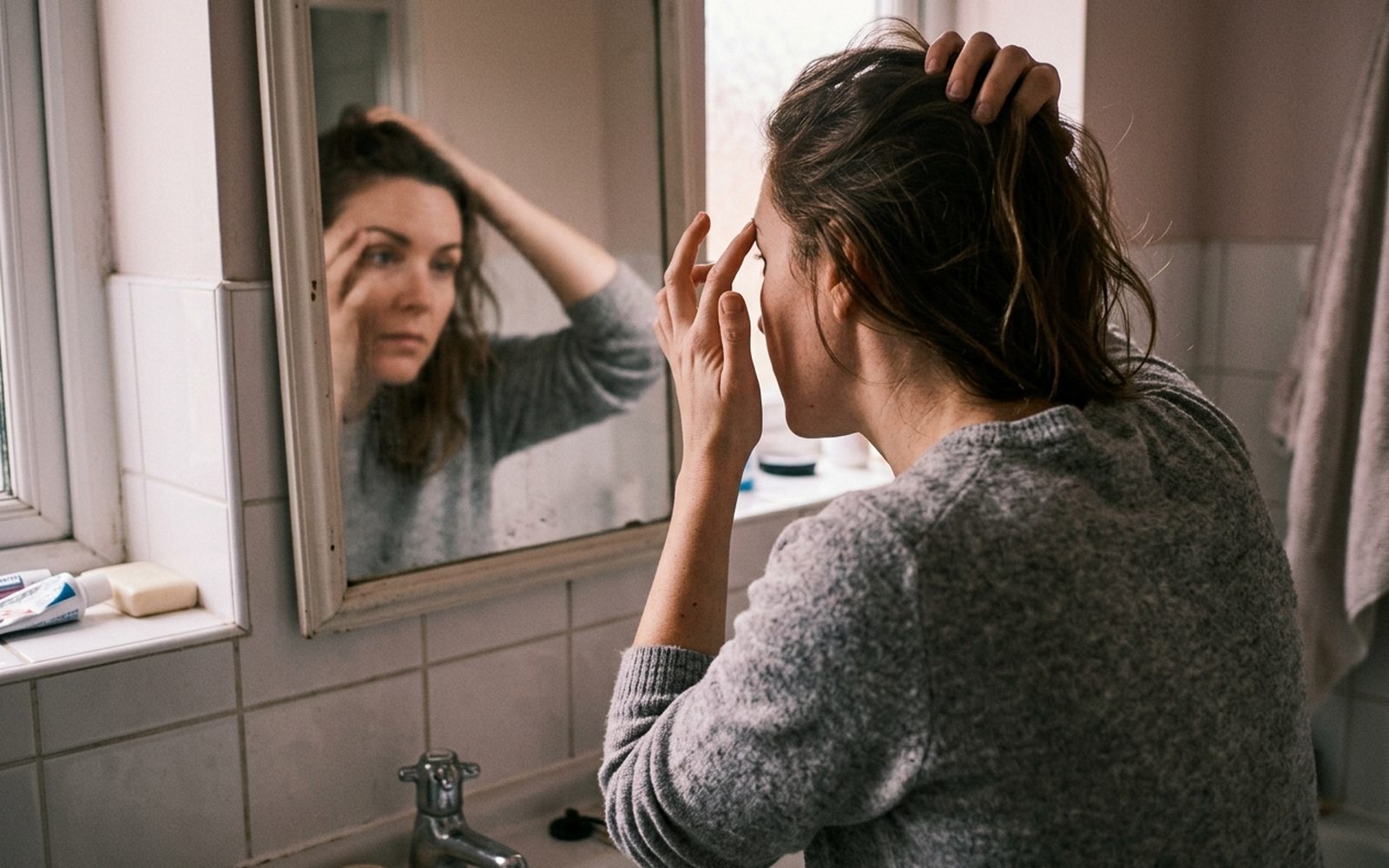
Thinning eyebrows and lashes: what it means when the hair goes elsewhere too
Eyebrow and eyelash follicles are on a different cycle from scalp hair and are usually spared by pattern thinning. When they go as well, it narrows the cause considerably. The five things to consider, in order.

Why your hair looks worse at night than in the morning
It is not your imagination. Between the school run and bedtime, hair loses lift, gains oil, and gets pulled about, and the parting that was fine at eight looks alarming at nine. What is happening, and the two-minute fix.
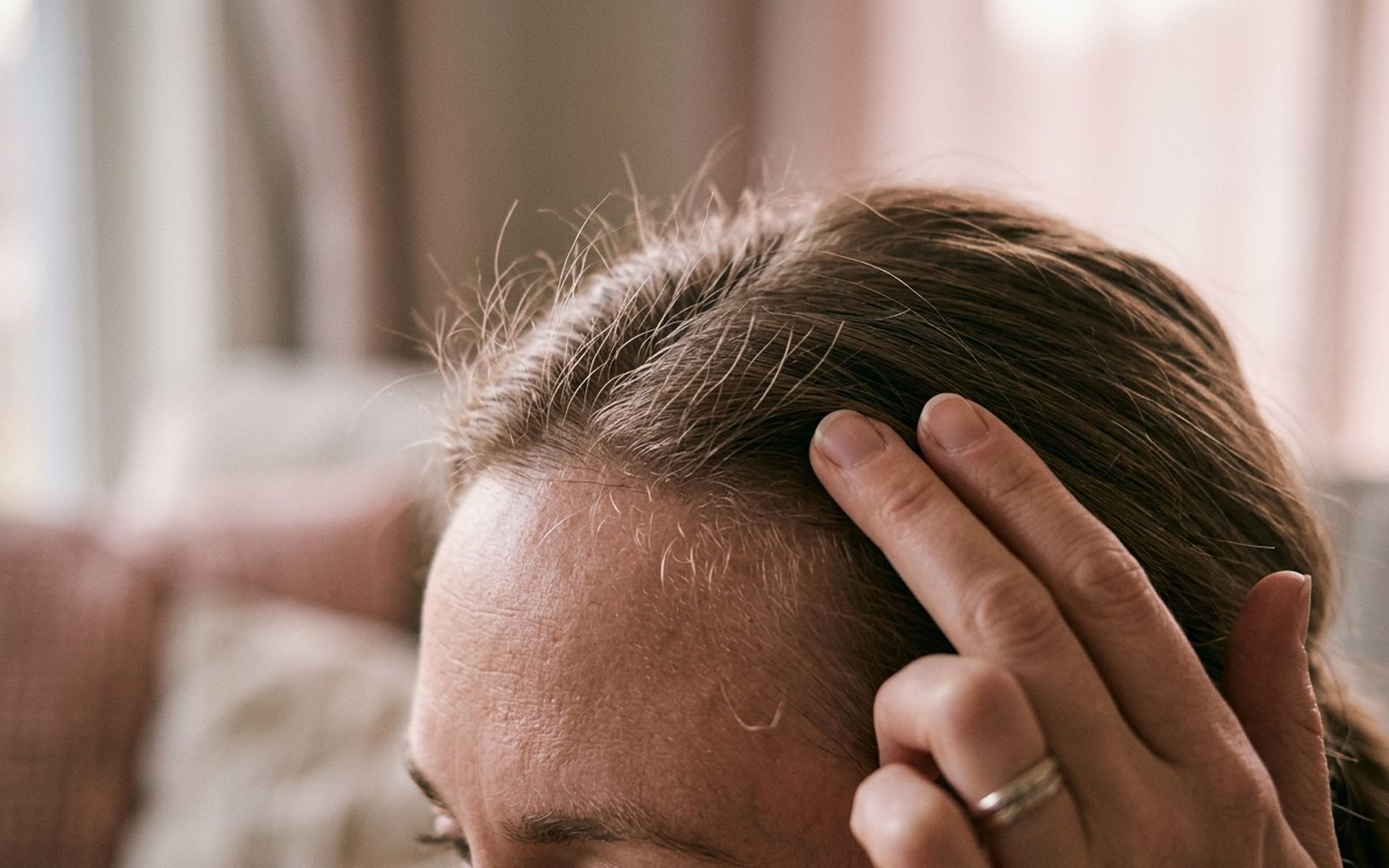
The regrowth is coming in. Now don’t break it.
The halo of short new hairs at the hairline is the best news a thinning head can get, and the three months after it appears are when most of it is lost to bobbles, brushes and straighteners. How to get new hair from two centimetres to full length.
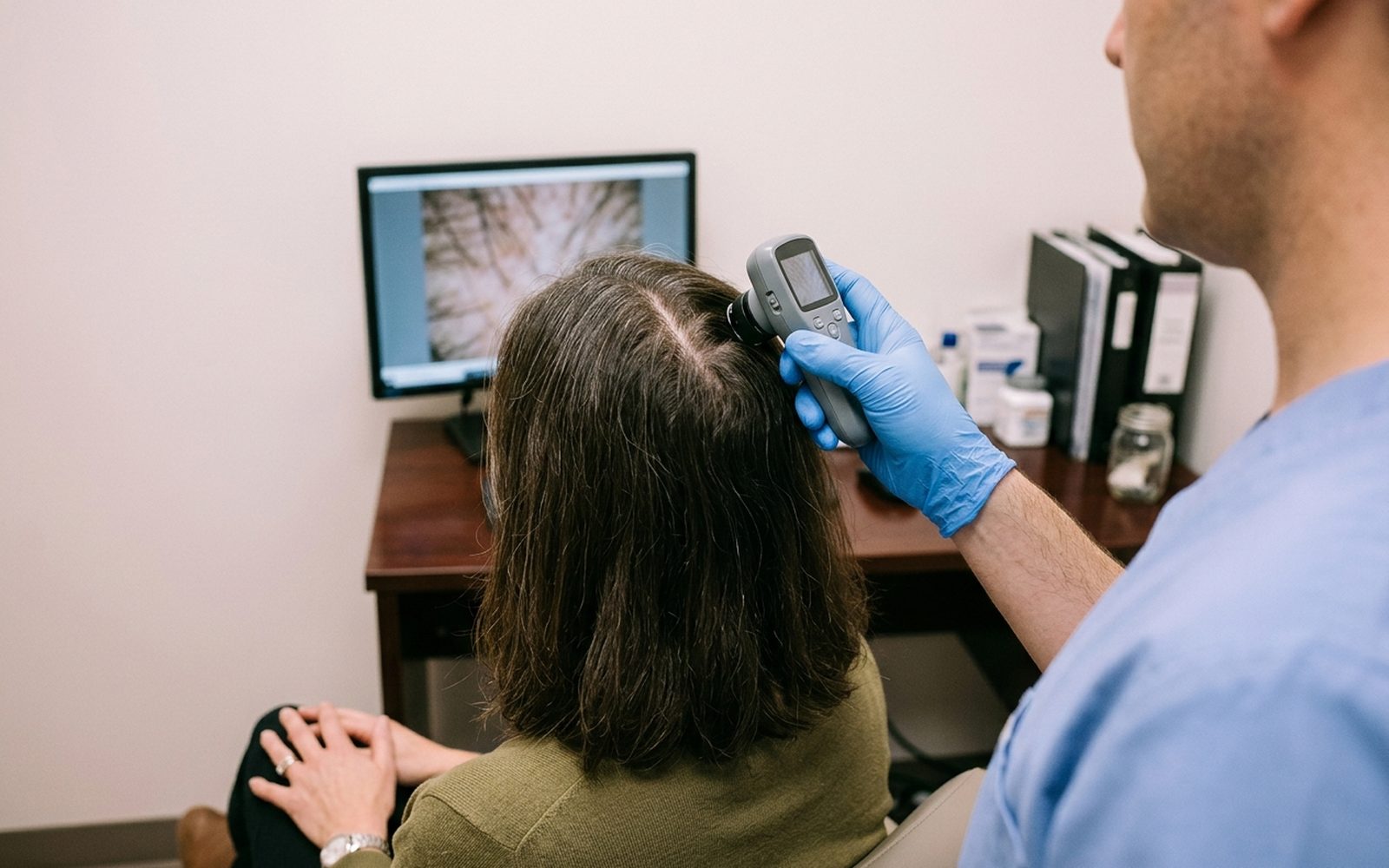
PRP, transplants, lasers and the clinic menu: an honest guide for women
The private clinics offer a long list, at a long price. Some of it has evidence, some has a mechanism and no trials, and some is theatre. What each treatment does, what it costs, and which women it is for.

Winter hair: static, hats, central heating and the January parting
From November the hair goes flat, fine, crackling and clings to everything, and the parting looks worse in the flat light. Winter is hard on fine hair for four reasons, and each has a cheap fix.

The hair you pull without noticing: twisting, twiddling and trichotillomania in mums
A surprising number of women have a patch of short broken hair they cannot explain. Many of them are making it themselves, while feeding, scrolling or lying awake. What it is, why it starts after children, and how to stop without shame.

Twins, triplets and the double shed
A multiple pregnancy means more oestrogen, more iron drawn down, more blood lost, less sleep and, three months later, a postnatal shed that can be twice the size. Why, what to expect, and what to have in place before the birth.

A first baby at forty: when the postnatal shed and perimenopause arrive together
More women than ever have their first child at 38, 40, 42. The postnatal drop then lands on follicles already feeling the slow decline of the forties, and the two are hard to tell apart. What is different, and why it matters for what you do.
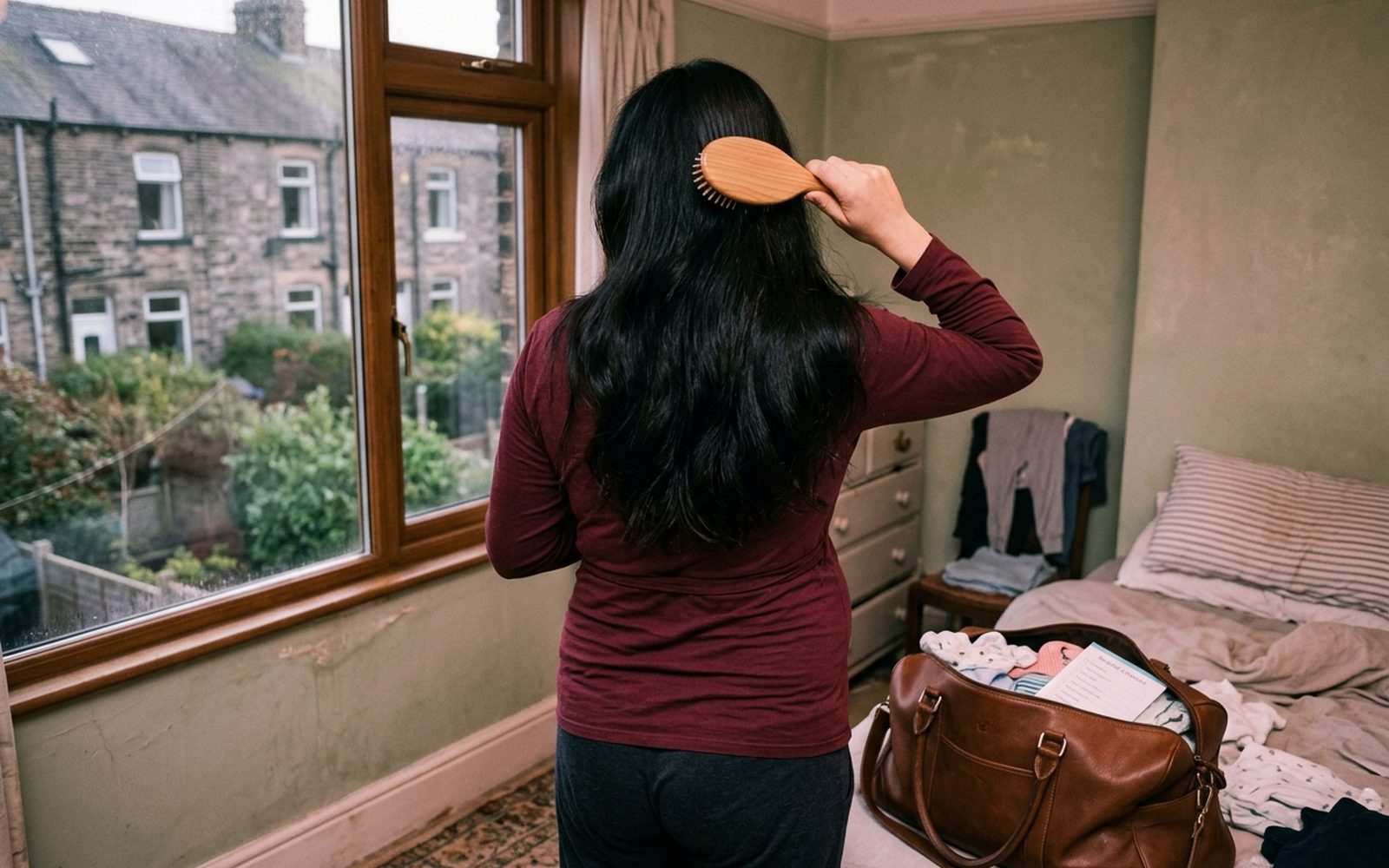
Pregnancy hair: why it is the best it has ever been, and what it is telling you
The thick, glossy, fast-growing hair of the second and third trimester is not a bonus. It is a preview of what your follicles can do when they are properly signalled — and a clue about what will happen after.

What to take to the GP appointment: the ten-minute checklist
You get ten minutes. Most of them go on describing the problem. Here is what to have ready so that the appointment ends with tests ordered and a plan, not a “give it time”.

Going back to work with hair that is not what it was
The return from maternity leave is the moment many women first feel their hair as a public problem. A few practical things for the first weeks, and a longer view for the year.

The medications that thin hair: a checklist for the bathroom cabinet
Beta blockers, blood thinners, acne treatments, anticonvulsants, the injection, the coil, statins, antidepressants: the list of everyday prescriptions that can shed hair is long and rarely mentioned. What to check, and what to do without stopping anything.

Silk pillowcases: what they do, what they don’t, and whether to bother
They are everywhere, they are expensive, and the claims are enormous. The truth is modest, real, and specific to fine and thinning hair.

Night sweats, the postnatal kind and the perimenopausal kind, and what they do to the scalp
Waking soaked is common after a baby and common again in the forties. The sweat itself does not harm hair; what it does to the scalp, the pillow and the styling habits around it can. What is happening, and the routine that keeps the scalp calm.

Gut health, coeliac disease and hair: when the problem is absorption
A follicle cannot use iron and zinc that never got through the gut wall. Coeliac disease, low stomach acid, long-term antacids and some gut conditions all quietly starve the follicle while the diet looks fine. How to tell, and what the gut-health industry gets wrong.
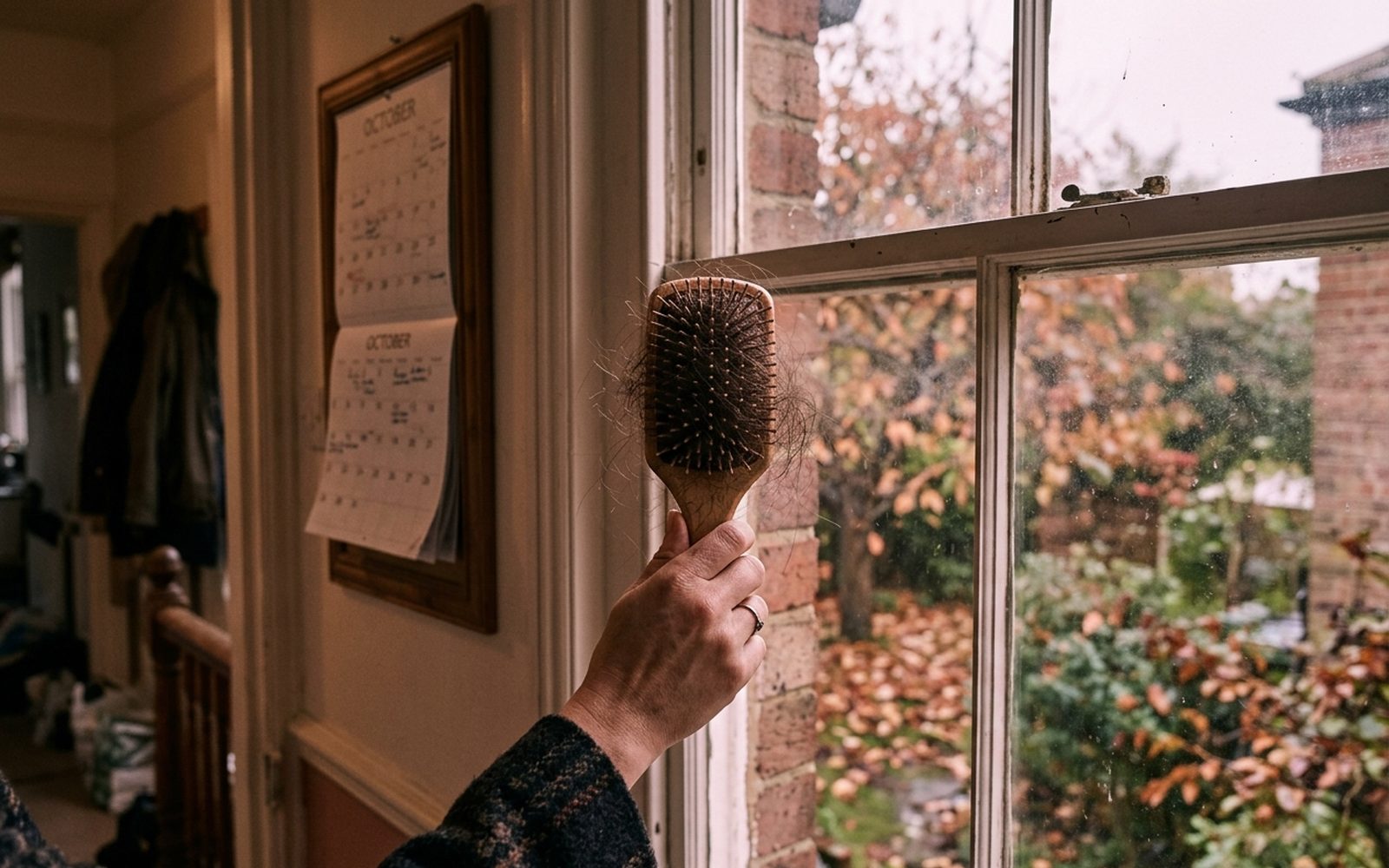
What normal shedding actually looks like, month by month
Fifty to a hundred hairs a day, more in autumn, more after a wash, more with long hair. Most of the women who write to us about shedding are shedding normally. Here is the reference so you can tell.

Dr Rachel Osei
BSc (Hons), MSc Trichology · Consultant trichologist · 14 years in clinic, specialising in postnatal and hormonal hair loss
Every article on mumscience is written by Rachel, from the pattern she sees in clinic week after week: mums in their late thirties and forties whose hair changed after children and who were told, by everyone, to give it time. She writes to explain what is actually happening at the follicle, in plain English, and to say clearly what will and will not help. About Rachel and how we work →