The GP appointment
Raising ferritin properly: the supplement mistakes that keep mums low for years

Low ferritin is one of the two most common treatable causes of hair loss in mums, and it is also the one most often treated badly. The tablets are cheap, the biology is simple, and yet I see women who have been “on iron” for three years with a ferritin of 18. Almost always the reason is one of five mistakes.
First: what number are you aiming for?
The lab’s normal range for ferritin starts around 15 to 30. For hair, most trichologists want it above 70, and some argue for 100 if the shedding is heavy. That is not a controversial position; the follicle simply has a higher demand than the rest of the body, and it is the first tissue to be rationed. If your GP tells you the result is normal, ask for the number. If it is under 40, you have a hair-relevant deficiency whether or not you have an anaemia.
Mistake one: the wrong dose, taken the wrong way
A standard prescription is ferrous sulphate 200mg, which contains about 65mg of actual iron, and the old advice was three times a day. The gut cannot absorb that much, and the unabsorbed iron is what causes the constipation, the nausea and the black stools that make people stop. Recent evidence shows that one tablet every other day is absorbed better than one every day, because a dose of iron raises a hormone called hepcidin that blocks absorption for about 24 hours. Alternate-day dosing, with fewer side effects, gets ferritin up faster than daily dosing that you abandon after a fortnight.
Mistake two: taking it with the wrong things
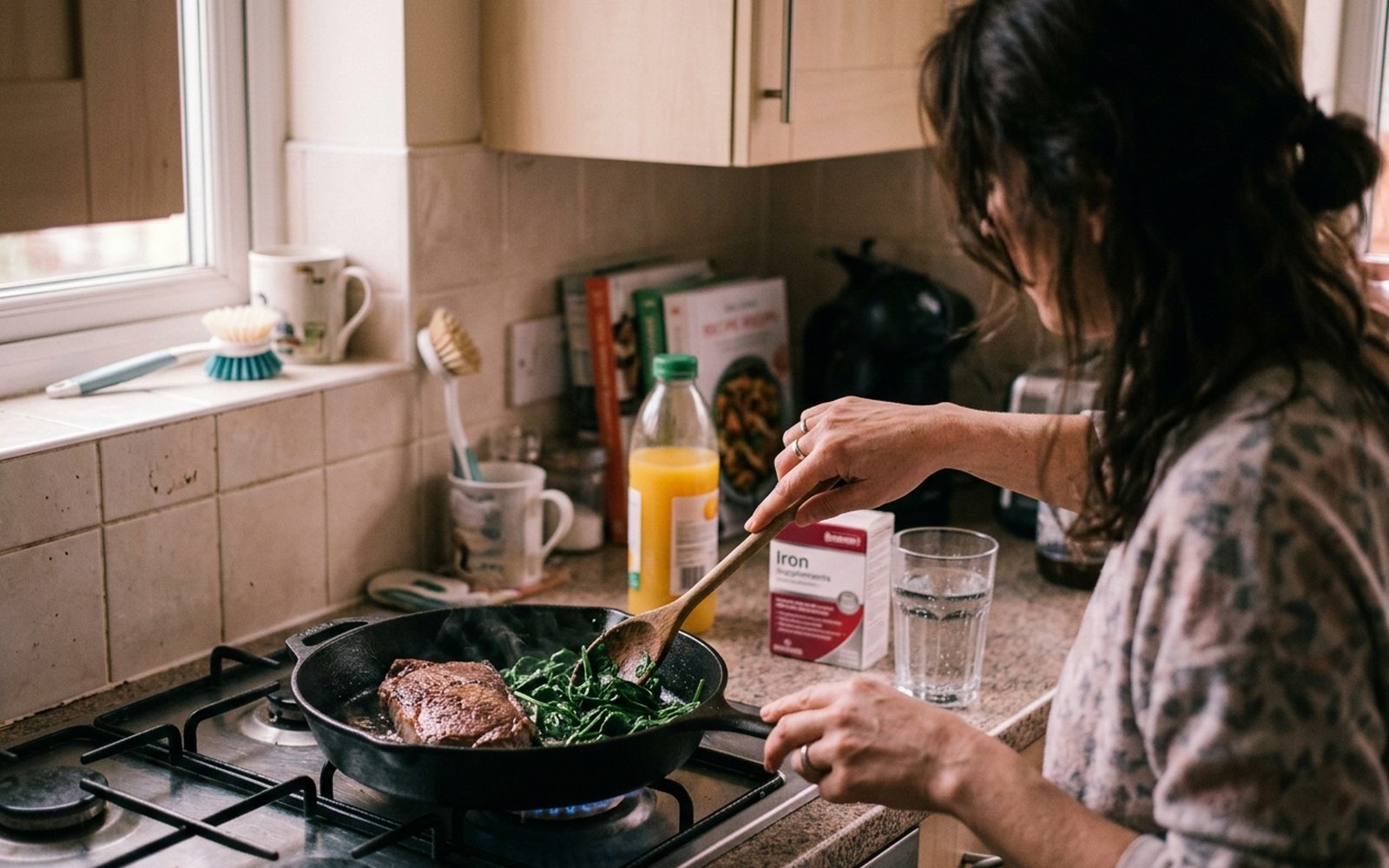
Tea, coffee, milk, calcium supplements, antacids and wholegrain cereal all block iron absorption when taken at the same time. Iron taken with breakfast tea is largely wasted. Take it on an empty stomach, or with a small glass of orange juice, an hour away from tea, coffee and dairy. If an empty stomach is intolerable, a small piece of fruit is fine. Vitamin C roughly doubles absorption; the orange juice is not a garnish.
Not sure which one is you?
Take the two-minute hair quiz
Twelve quick questions. We tell you what we think is going on, what to do about it, and we say so if it is something we cannot help with.
Start the quiz →Mistake three: the gentle formula that is too gentle
Gummies, “gentle iron” spa-tonics and most multivitamins contain 5 to 14mg of iron. That is a maintenance dose for someone with normal stores, not a repletion dose for someone at 18. If you are using one of these to rebuild ferritin, you will be at it for years. Look for a product with at least 25mg of elemental iron per dose; ferrous bisglycinate at 25 to 30mg is well absorbed and much easier on the stomach than sulphate, and is the form I usually suggest for women who could not tolerate the prescription tablet.
Mistake four: stopping when you feel better
Energy improves within weeks because haemoglobin responds first. Ferritin — the store — takes three to six months to rebuild, and the hair does not respond until the store is up. Take iron for at least three months, retest, and continue until ferritin is above 70. Then drop to a maintenance dose or dietary iron, and retest again in six months, because periods, breastfeeding and the next pregnancy all draw it down again.
Mistake five: not asking why it is low
Pregnancy, breastfeeding and heavy periods account for most low ferritin in mums. But if you are taking iron correctly and the number will not move, something is either losing it or not absorbing it. Heavy periods can be treated. Coeliac disease, which is often silent, stops absorption and is worth a blood test. So do stomach acid medications taken long-term. Ask.
Food alone
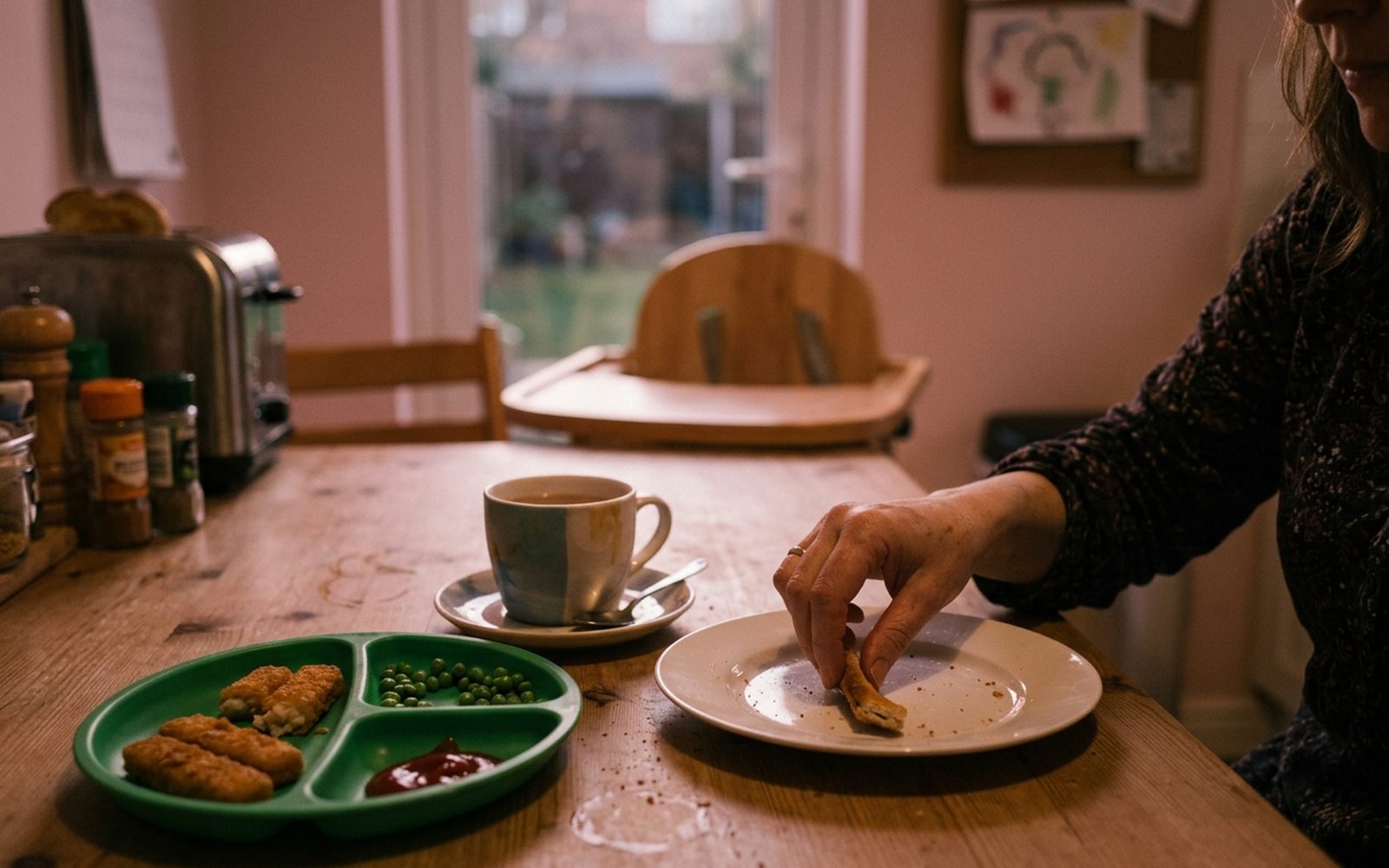
Dietary iron will maintain a good ferritin but rebuilds a low one very slowly. Red meat twice a week, liver occasionally, sardines, dark poultry meat, lentils and pumpkin seeds, with vitamin C alongside and tea kept away, is the pattern that works. The food article covers it in the context of a real mum’s day.
What to expect when it works
Shedding reduces first, usually within two to three months of the ferritin reaching 50 or so. Regrowth follows at three to six months. Density catches up over a year. If ferritin is corrected and the temples and parting still do not recover, iron was a contributor rather than the cause, and the follicle-level process described in the hairline article is the next thing to look at.
Ready to read your own pattern?
Take the two-minute hair quiz
Twelve questions. We tell you what we think is going on for you, and we say so if it is something a GP should see first.
Start the quiz →