Postnatal
Pregnancy hair: why it is the best it has ever been, and what it is telling you

Most women notice, somewhere around twenty weeks, that their hair is doing something it has never done: the brush is empty, the ponytail is thick, the ends are not splitting. It is worth understanding why, because it is the clearest demonstration you will ever get of how much your follicles are capable of.
What is happening
Oestrogen, rising steadily through pregnancy, does three things to the follicle. It lengthens the growing phase, so hairs that would have finished and shed keep growing. It suppresses the resting phase, so almost no follicles are letting go — the daily shed drops from a hundred hairs to a handful. And it blunts the effect of androgens at the temples and parting, so follicles that had begun to miniaturise produce a thicker hair again. Blood volume and flow to the skin also rise by nearly half, and the follicle is well supplied. The result is more hair, thicker hair, held longer.
What it tells you
Everything you are seeing is your own follicles, doing what they do when the signals are right. No new follicles have been made. The corners that filled in during pregnancy were not dead; the parting that closed was not gone. The follicles were there, quiet or miniaturising, and a strong enough signal woke them. That is the whole argument of this site in one observation: the follicle is recoverable, and the question is only how to signal it once oestrogen is no longer doing so.
The other side of the glow
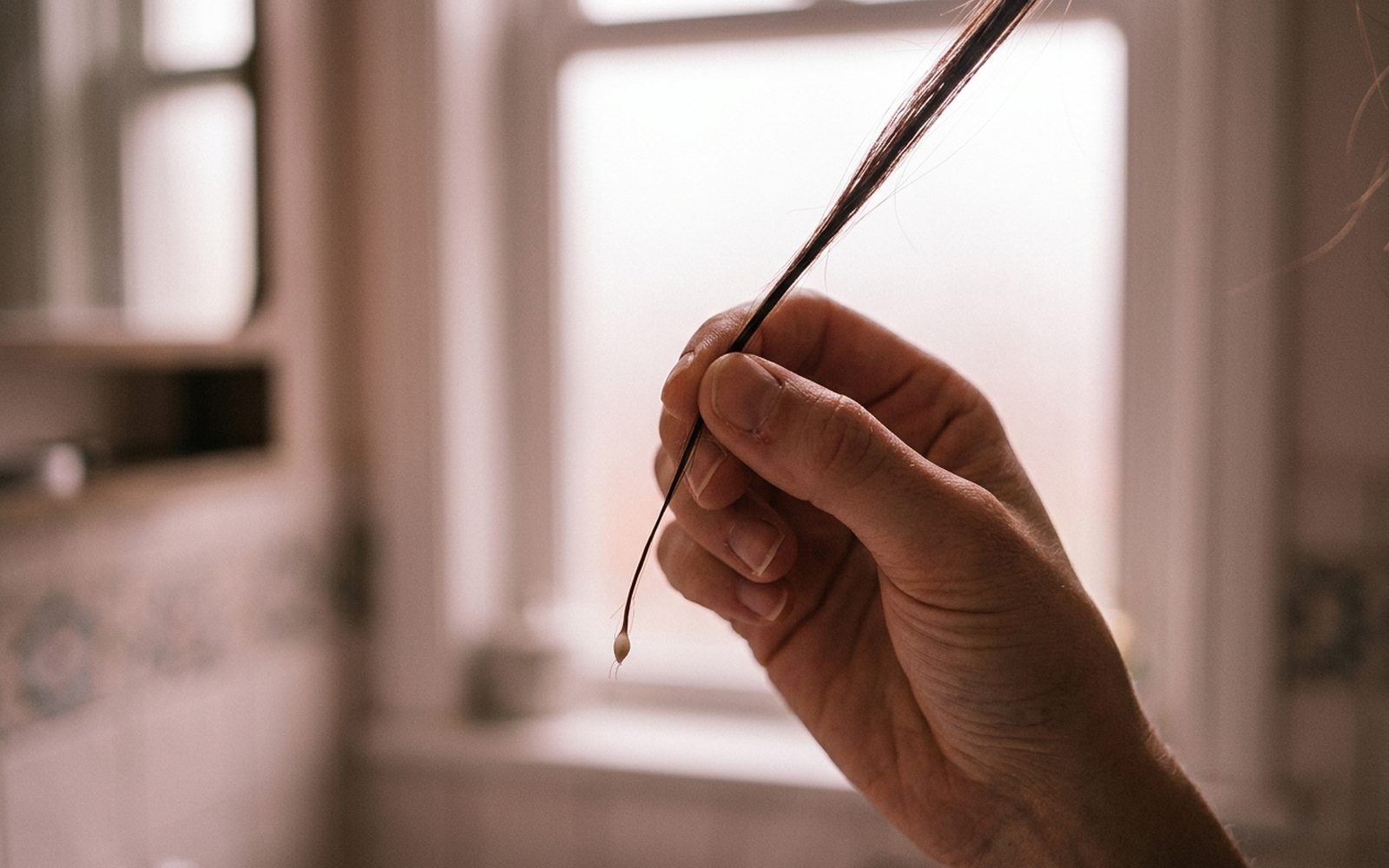
The hair that is being held will be released. Everything that would have shed over six months of pregnancy sheds over six weeks after it, and that is the postnatal shed. It is not loss beyond the normal; it is the normal, delayed and bunched. The question that matters is not how much comes out at three months but how much comes back by twelve.
Not sure which one is you?
Take the two-minute hair quiz
Twelve quick questions. We tell you what we think is going on, what to do about it, and we say so if it is something we cannot help with.
Start the quiz →Pregnancy hair that is not good
A minority of women find their hair worse in pregnancy: drier, flatter, shedding. That usually means low iron (very common by the third trimester and screened for by haemoglobin, not ferritin), hyperemesis and its months of not eating, a thyroid that has shifted, or a shed from stopping contraception or from IVF that arrived inside the pregnancy. It is worth mentioning at an antenatal appointment; it is not a sign the pregnancy is wrong, but it is a sign the supply is short, and the supply is what the follicle will need afterwards.
What to do while it is good
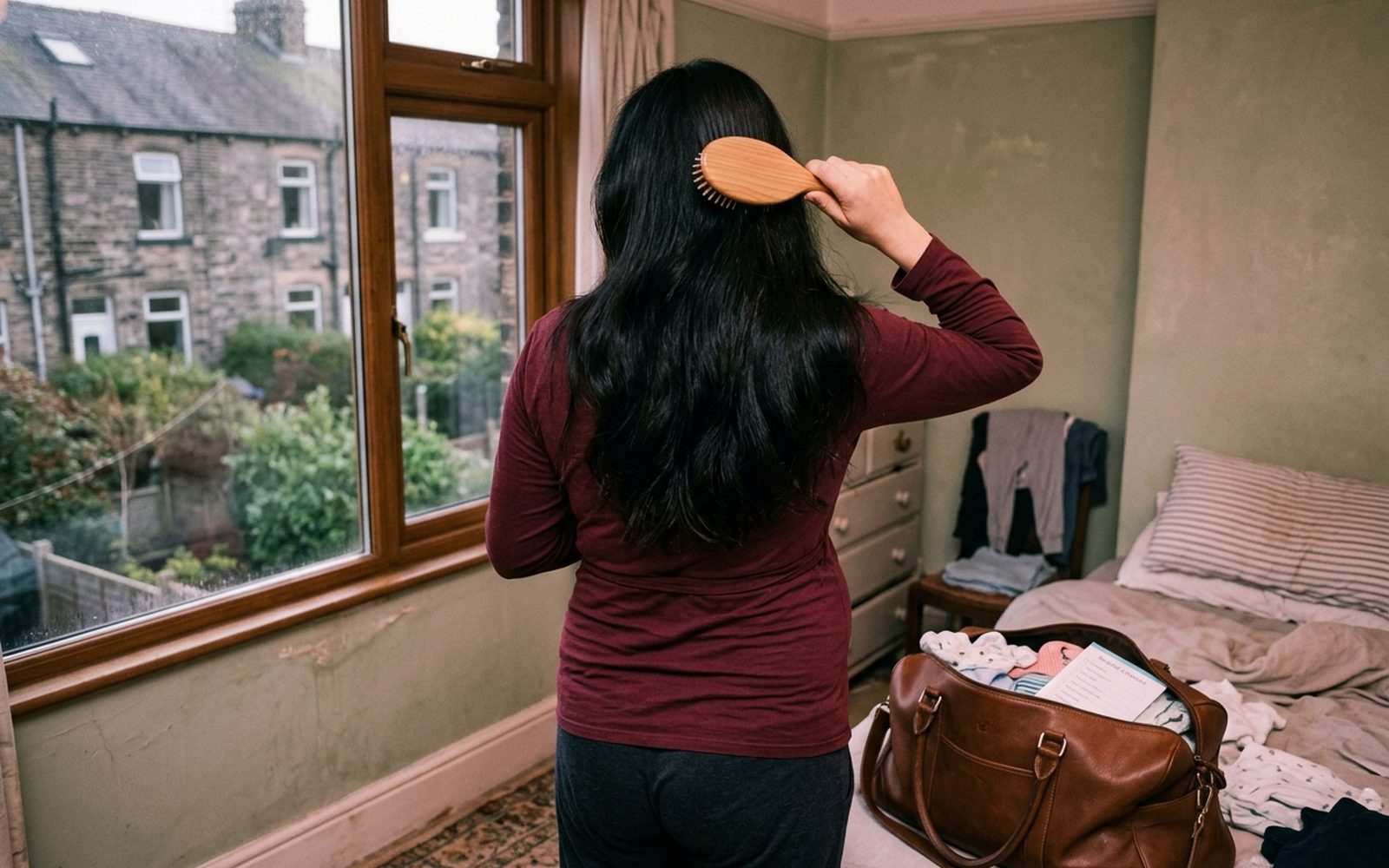
Photograph it. Parting and hairline, at 30 weeks, in the bathroom light. It is the best baseline you will ever have, and it is what you compare the twelve-month postnatal picture against.
Get ferritin to 70 before the birth. The follicles restart fastest afterwards on a full store, and pregnancy anaemia checks do not measure it. Ask.
Do not cut it all off. The urge to go short before the baby is common and the shed lands worse on short hair, because the regrowth has no length to hide in. A trim, not a chop.
Enjoy it. That is allowed.
Ready to read your own pattern?
Take the two-minute hair quiz
Twelve questions. We tell you what we think is going on for you, and we say so if it is something a GP should see first.
Start the quiz →