Evidence
The hair cycle in plain English: why everything about hair takes three months

If there is one piece of biology worth ten minutes of a mum’s time, it is this one. Almost everything confusing about hair loss — why it starts months after the thing that caused it, why treatments take so long, why the follicle can be fine and the hair still gone — comes from the cycle.
The four phases
Growing (anagen). The follicle is building a hair, adding around a centimetre a month. On the scalp this phase lasts two to seven years, which is why some women can grow hair to their waist and others cannot get past their shoulders: it is not care, it is the length of their anagen. Around 85 to 90 per cent of your follicles are in this phase at any moment.
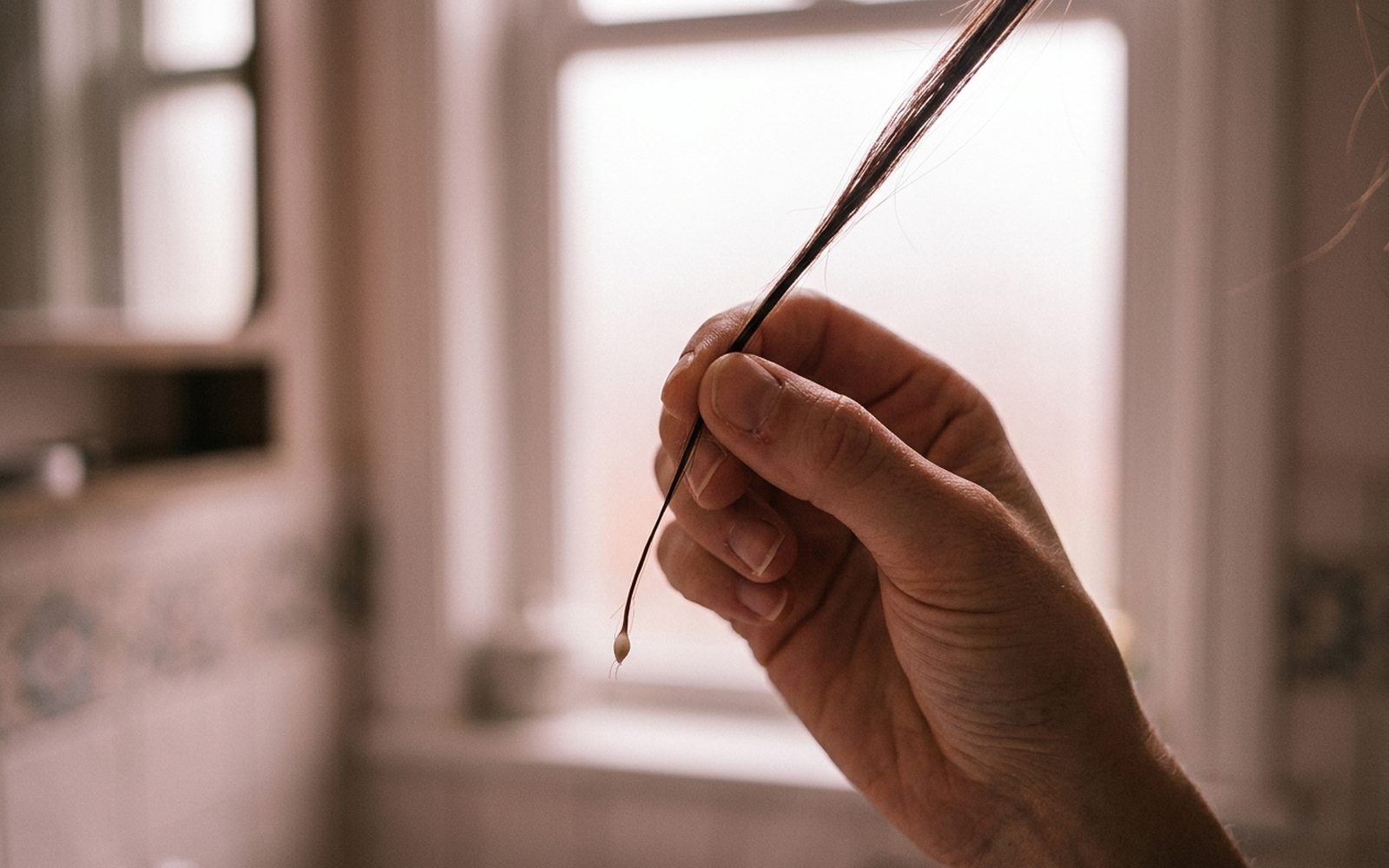
Transition (catagen). Over two to three weeks the follicle stops building, shrinks, and the hair is cut off from its blood supply. The root forms a small white club — the bulb you see on a shed hair.
Resting (telogen). The follicle sits quiet for around three months, holding the old hair in place. Around 10 per cent of follicles are here normally.
Not sure which one is you?
Take the two-minute hair quiz
Twelve quick questions. We tell you what we think is going on, what to do about it, and we say so if it is something we cannot help with.
Start the quiz →Release (exogen). The old hair is let go — the brush, the plughole, the pillow — and, in a healthy follicle, a new hair is already starting beneath it. Fifty to a hundred hairs a day released this way is normal and means nothing.
Why the three-month delay
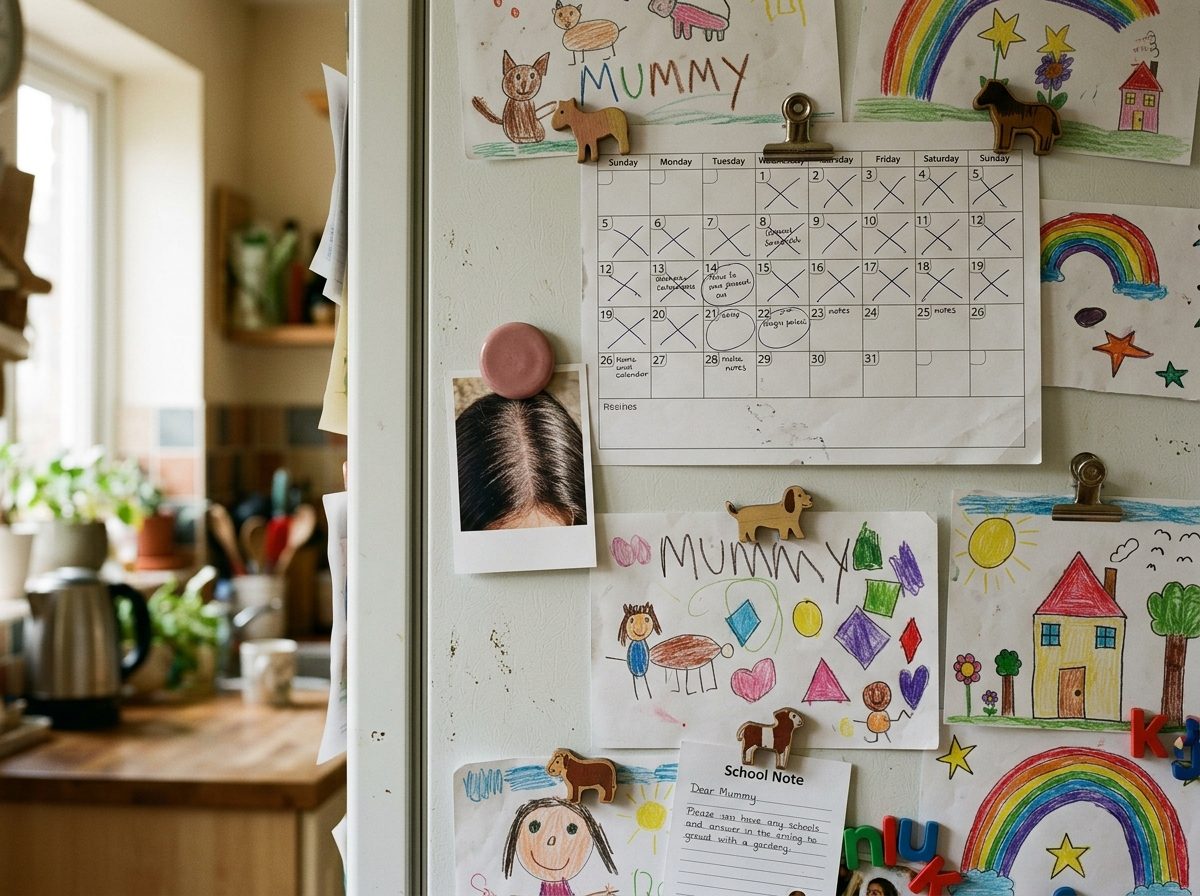
When something — a birth, a fever, a crash diet, a surgery, a new medication — pushes a large number of follicles out of growing and into resting all at once, nothing visible happens immediately. The follicles hold their hair through the three-month rest. Then they release together, and that is the shed. It arrives when you have long since felt better, which is why the cause is so often missed. If you want to know what triggered a shed, look at the calendar two to four months before it started.
Why treatments take twelve weeks
A treatment that persuades a resting follicle to restart cannot be seen until that follicle has built enough new hair to notice: a few weeks to restart, then a centimetre a month. That is why nothing honest promises change before eight to twelve weeks, why shedding often reduces before regrowth appears, and why the twelve-week timeline looks the way it does.
Why a follicle can be alive and producing nothing
A follicle that has finished resting is supposed to receive a signal to begin a new growing phase. If the signal does not come — because oestrogen has dropped, because DHT is telling it to shrink, because its blood supply is poor — the follicle stays quiet. Empty, but alive. From the surface an empty living follicle and a dead one are indistinguishable. This is the state of the follicles at the temples and parting of most of the mums I see, and it is the reason they can be restarted: they were never dead.
What miniaturisation is
A follicle under the influence of DHT does not stop; it shortens its growing phase each cycle. A hair that used to grow for four years grows for two, then one, then a few months. Each shorter cycle produces a shorter, finer hair. Over years the follicle shrinks to match, until it is producing a hair you cannot see. That is a widening parting: not fewer follicles, but follicles on ever-shorter cycles. Reversing it means lengthening the cycle again, and it is most reversible while the hairs are still fine rather than invisible.
Where this leaves you
With a rule of thumb: whatever is happening to your hair now reflects what was happening to your follicles three months ago, and whatever you do for your follicles now will show in three months. Photograph today, act today, judge in twelve weeks.
Ready to read your own pattern?
Take the two-minute hair quiz
Twelve questions. We tell you what we think is going on for you, and we say so if it is something a GP should see first.
Start the quiz →