Postnatal
Second pregnancy, second shed: why the hair copes worse the second time

Almost every mum of two tells me the same thing: the hair came back after the first baby and did not, quite, after the second. She assumes it is age, or the second child being a worse sleeper. Both are part of it. But the main reason is that follicles keep score.
What the first shed does to a follicle
The postnatal shed is a synchronised event. Oestrogen falls, and thousands of follicles that had been held in the growing phase release their hairs together and rest. Most restart within a few months. A proportion — usually at the temples and along the parting, the follicles with the most androgen receptors — restart late, or restart producing a slightly finer hair than before, or do not restart at all. After the first baby this proportion is small and the loss is invisible under the hair that did come back.
Why the second is different
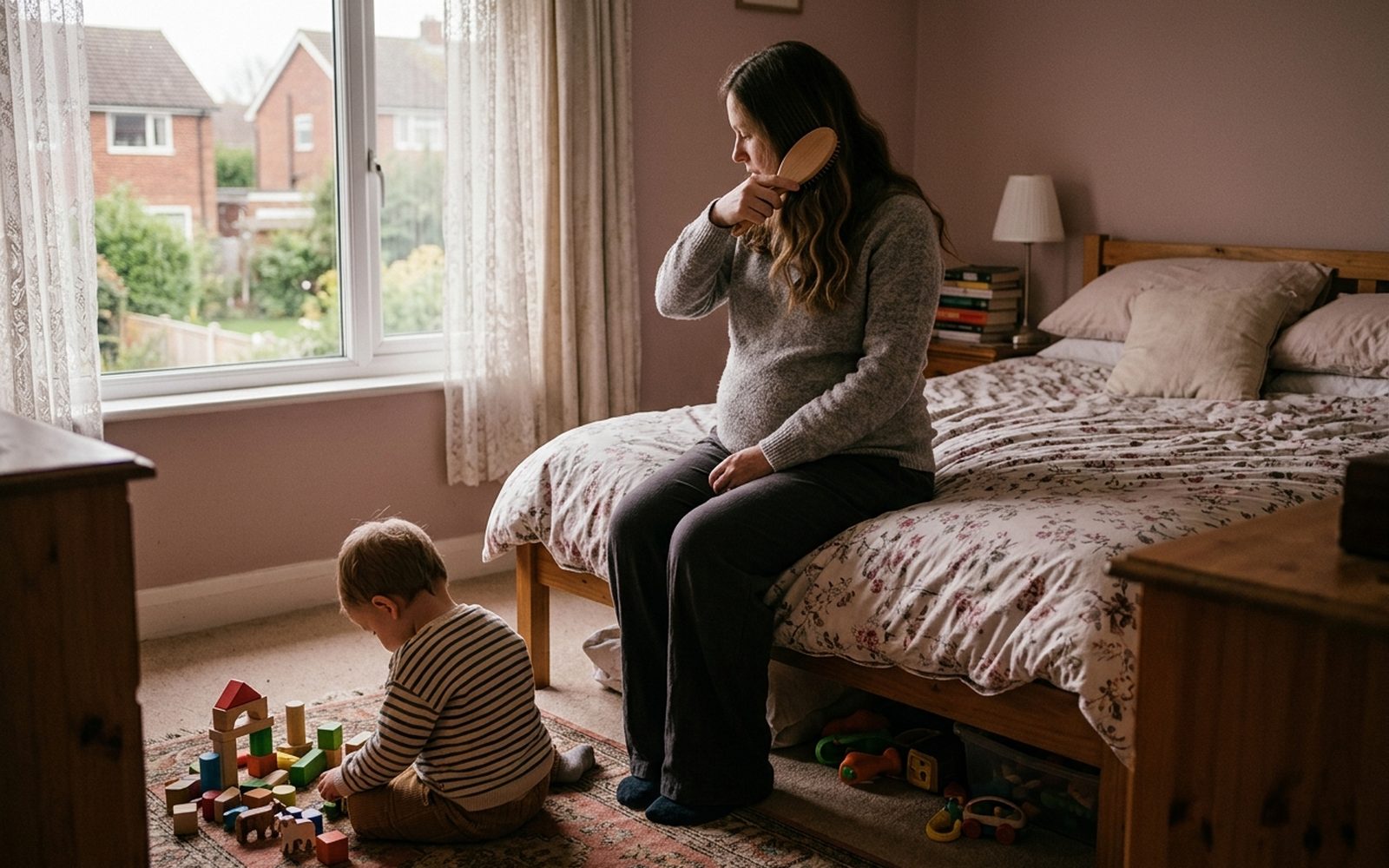
By the second pregnancy the follicles that struggled the first time have not had the years they need to recover fully. Pregnancy gives them a temporary reprieve — high oestrogen makes even a weak follicle behave — which is why the hair often looks wonderful again in the third trimester. Then the drop comes, and it lands on a follicle population that was already carrying damage. This time the proportion that stays quiet is bigger, and it is in the same places, so the thinning is now concentrated enough to see.
Add the things that stack on top: two or three years older, so the slow hormonal decline of the late thirties may have begun; iron stores drawn down twice with little chance to rebuild; a toddler, so the sleep and cortisol picture is worse; and often a shorter gap between weaning and the next conception than the body had bargained for. None of these on its own would do much. Together they explain the pattern I see every week.
Not sure which one is you?
Take the two-minute hair quiz
Twelve quick questions. We tell you what we think is going on, what to do about it, and we say so if it is something we cannot help with.
Start the quiz →The first shed tests the follicle. The second one finds out what the test showed.
The tell-tale timeline
If the second shed has followed the normal script, it starts around three months after the birth, peaks at four to five, and eases by six to seven. Regrowth — the short halo at the hairline — appears at five to nine months. If by the child’s first birthday the temples and parting are still visibly thinner than they were before the pregnancy, the follicles there have not restarted, and the shed has finished being a shed.
What to do if you are pregnant with the second now
Get ferritin checked and, if it is under 70, corrected before the birth. The follicles that restart fastest after the drop are the ones with iron to do it with. Pregnancy anaemia screening looks at haemoglobin, not ferritin, so ask specifically. How to raise it is here.
Do not colour with lift or wear tight styles in the last trimester. The hair you go into the shed with is the hair that carries you through it.
Photograph the parting and hairline now, in the kitchen light. You will want the baseline at twelve months.
What to do if the second child is two and the hair never came back
You are past the shed. Waiting has done what it was going to do. The follicles that are quiet now need a signal to restart, and the sooner it is given the more follicle there is to work with, because a resting follicle miniaturises a little more each year it stays resting. The pattern of what you are seeing — corners, parting, ponytail — tells you which explanation fits, and that article walks through them.
Ready to read your own pattern?
Take the two-minute hair quiz
Twelve questions. We tell you what we think is going on for you, and we say so if it is something a GP should see first.
Start the quiz →