The GP appointment
What a trichologist actually checks — and how to do it at home

The reason so many women cannot tell whether their hair is improving is that they are judging it by feel, in the mirror, on a bad morning. In clinic we measure. You can do the same with a phone, a tape measure and a bobble.
1. The parting photograph
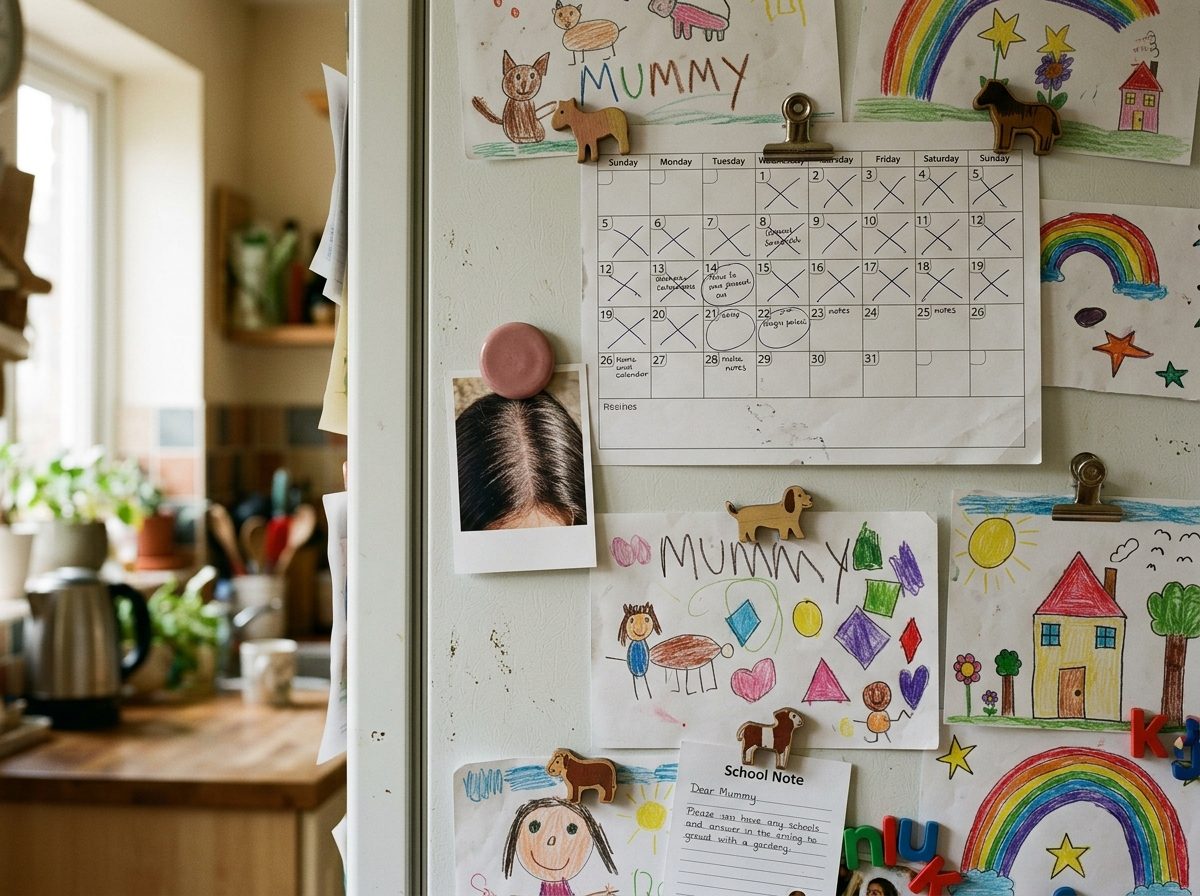
Same bathroom, same overhead light, same time of day, once a month. Centre parting, hair pulled back, phone held directly above your head. The width of the parting and how much scalp shows along it is the single most sensitive measure of diffuse thinning, and a month-on-month photo series is more persuasive to a GP than anything you can say.
2. The temple photograph
Same conditions, from the side, hair pulled back, the corner of the hairline in the light. Mark where the hairline meets the skin against a fixed point — the outer edge of the eyebrow is the usual one.
3. The ponytail circumference
Gather a low ponytail at the nape as tightly as you comfortably can and wrap a soft tape measure round it just below the bobble. Write the number down. This measures total hair volume and is the one thing the mirror cannot show you. A change of half a centimetre is real.
Not sure which one is you?
Take the two-minute hair quiz
Twelve quick questions. We tell you what we think is going on, what to do about it, and we say so if it is something we cannot help with.
Start the quiz →4. The gentle pull
Take about sixty hairs between finger and thumb near the scalp and pull slowly and firmly to the ends. Losing up to five is normal. Ten or more, consistently, on unwashed hair, means the shedding phase is active. Do it in the same three places each month: the crown, a temple, and the back.
How to read the numbers
- Parting widening, ponytail shrinking, pull test normal: follicles miniaturising quietly. The hormonal pattern.
- Pull test high, parting and ponytail steady: an active shed. Check iron and thyroid, look back two to three months for the trigger.
- Everything steady but texture worse: fibre quality, which is still the follicle — see texture change.
- Any patch of bare scalp, round and defined: GP, this week.
Whatever you decide to try, take the four measurements the day you start and again at twelve weeks. It is the only honest way to know.
Ready to read your own pattern?
Take the two-minute hair quiz
Twelve questions. We tell you what we think is going on for you, and we say so if it is something a GP should see first.
Start the quiz →