Hormones
Night sweats, the postnatal kind and the perimenopausal kind, and what they do to the scalp

Two groups of women wake up drenched: new mums in the first six weeks, and women in perimenopause. Some are both. The sweats are a hormonal symptom with a hormonal cause, and they matter for hair indirectly, through the scalp.
The postnatal kind
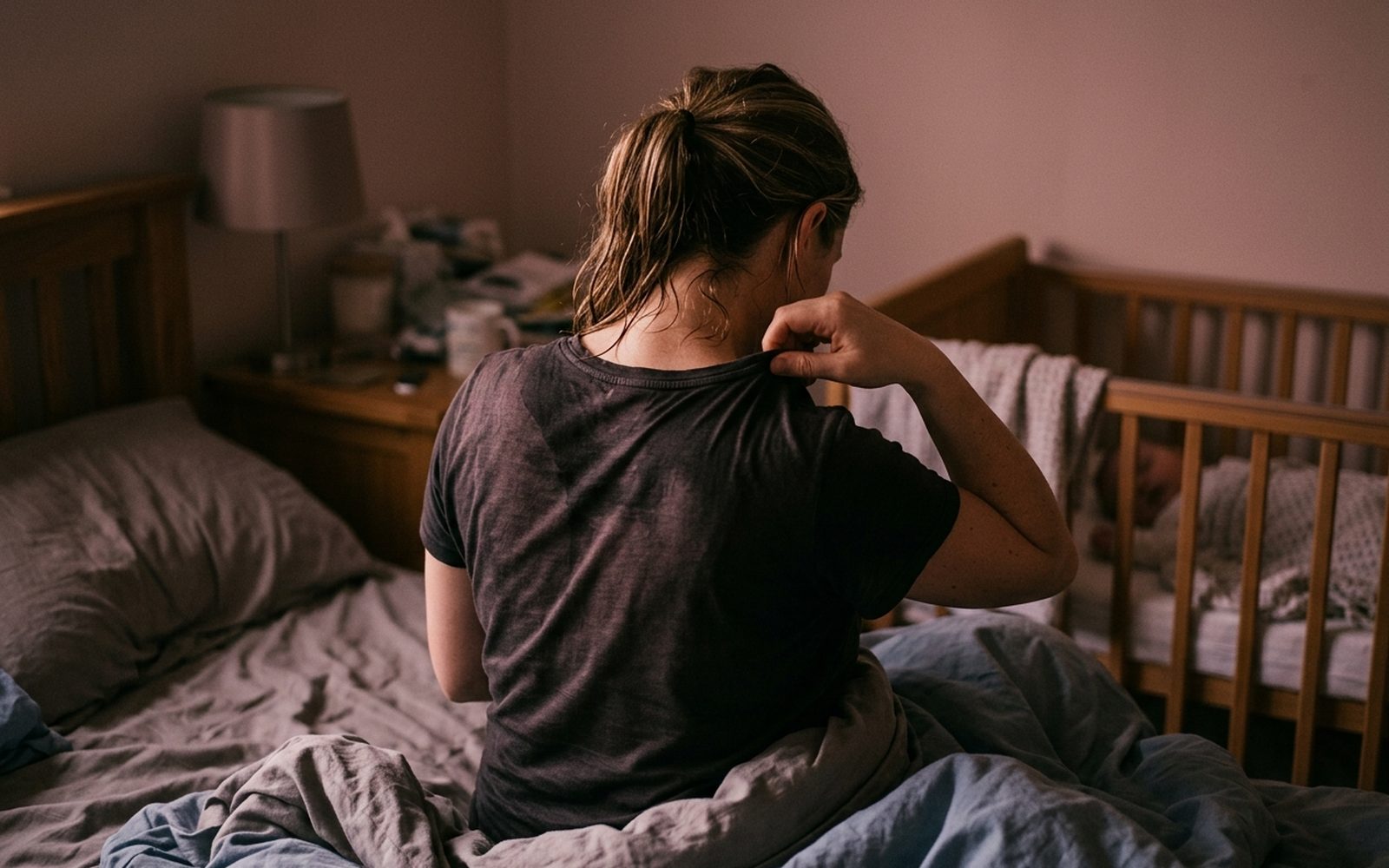
After the birth the body sheds the extra fluid of pregnancy, and it does much of it through the skin at night. Add the oestrogen drop, which unsettles temperature regulation, and the result is a fortnight to six weeks of night sweats that are entirely normal and settle on their own. Breastfeeding mums get them for longer, because prolactin keeps oestrogen low.
The perimenopausal kind
Fluctuating oestrogen disrupts the brain’s thermostat and produces the hot flush and its night-time version. It can begin at 38, comes and goes for years, and is one of the symptoms GPs recognise as perimenopause even in women under 45. If you are having them, and your hair is thinning at the temples and parting, the two share a cause, and that article is the one to read.
What sweat does to the scalp
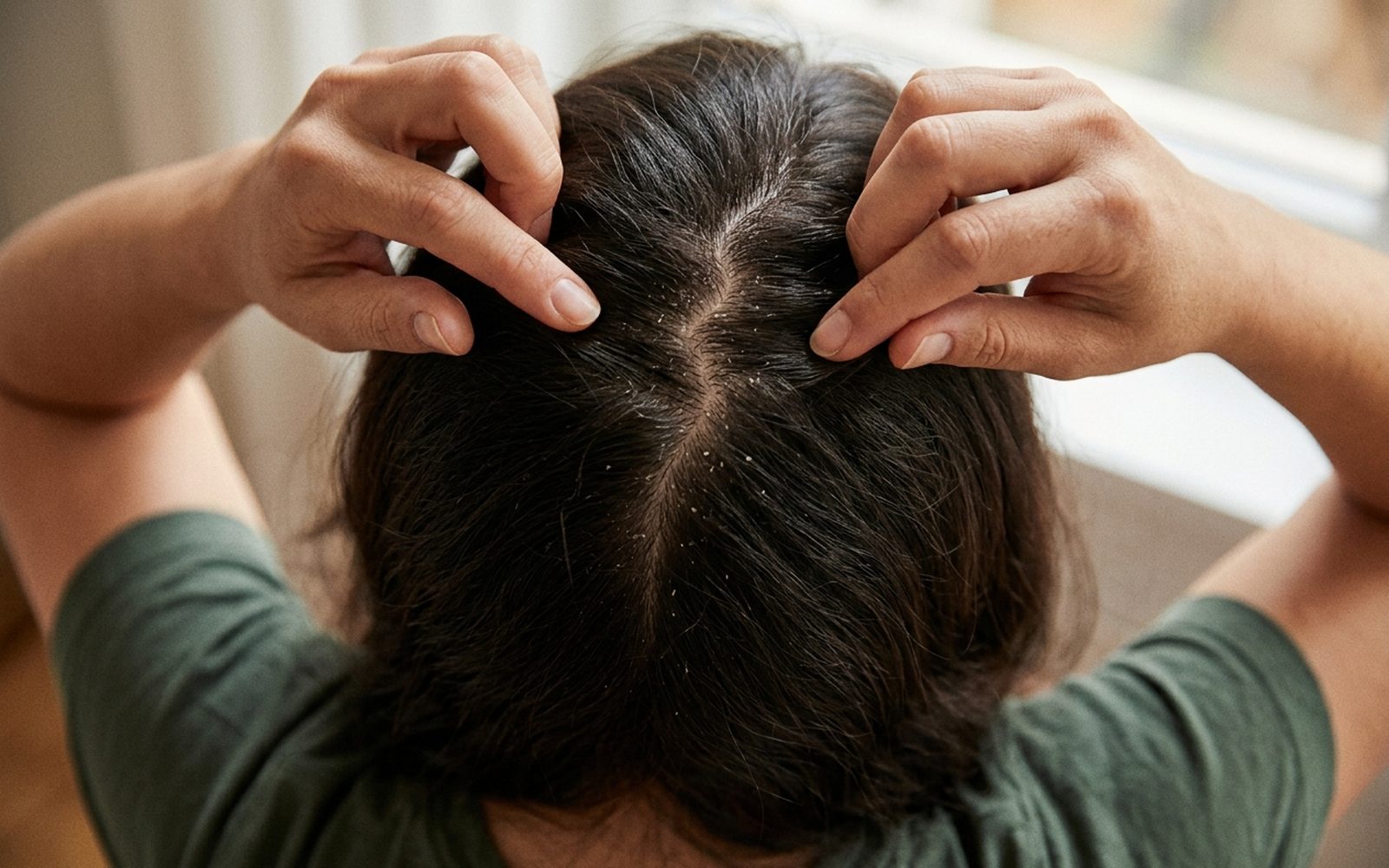
Sweat is salty and slightly acidic, and it is produced alongside oil. Dried on the scalp overnight, several nights a week, it leaves a salt-and-sebum film that irritates the skin, feeds the yeast that causes flakes, and clogs the follicle openings. The itchy, flaky, tender scalp that many women develop in the postnatal months and again in perimenopause is partly this. And an inflamed scalp is one that grows hair badly, at a time when the follicles are already under hormonal strain.
Not sure which one is you?
Take the two-minute hair quiz
Twelve quick questions. We tell you what we think is going on, what to do about it, and we say so if it is something we cannot help with.
Start the quiz →Sweat-soaked hair is also fragile in the morning: wet hair stretches and snaps, and a sweaty head that goes straight into a tight bobble on the school run is a breakage problem.
The routine
Rinse the scalp in the morning. Not a full wash; a rinse under the shower and a fingertip scrub. Two minutes.
A scalp-only shampoo on the worst mornings, no conditioner, air-dried or dryer on medium at the roots only.
An anti-fungal shampoo twice a week if flakes have appeared. Which one.
Hair in a loose plait at night so it is not matted with sweat in the morning; never a bobble.
The pillowcase changed every two or three days while the sweats are bad. A silk one dries faster and is kinder to damp hair.
No dry shampoo on a sweaty scalp. It cakes.
The sweats themselves
Postnatal: cotton nightwear, layered bedding, a glass of water by the bed, and patience. Perimenopausal: the same, plus a conversation with a GP if they are disrupting sleep, because sleep disruption is itself a driver of thinning, and because treating the sweats (HRT or non-hormonal options) treats a cause of the hair problem as well as the symptom. What HRT does for hair.
Ready to read your own pattern?
Take the two-minute hair quiz
Twelve questions. We tell you what we think is going on for you, and we say so if it is something a GP should see first.
Start the quiz →