Texture
Winter hair: static, hats, central heating and the January parting

If your hair has a bad season, it is probably this one. The cold, the hats, the heating and the light all conspire against fine hair between November and March, and the effect is large enough that women regularly conclude in January that their thinning has suddenly got worse. Usually it has not. Here is what has.
Dry air
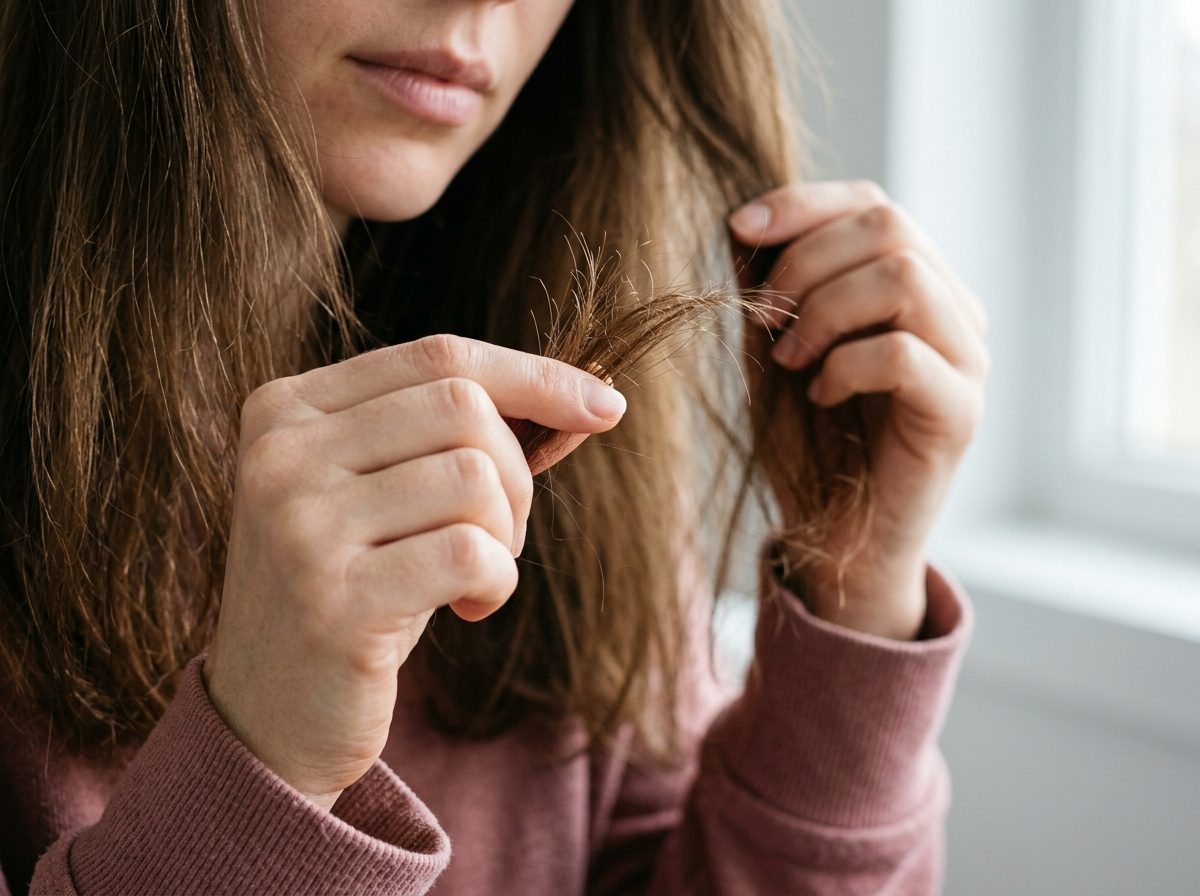
Central heating drops indoor humidity to desert levels. Hair loses water to dry air, and dry hair is stiff, dull, frizzy and more likely to snap. Fine hair, which has less cortex to hold water, dries fastest. The fix is moisture: a leave-in conditioner or a few drops of a light oil on the lengths after every wash, a deeper mask once a week, and a bowl of water on the radiator or a small humidifier in the bedroom.
Static
Dry hair rubbed against a wool hat, a scarf or a synthetic jumper picks up charge and stands on end. It looks thinner because the hairs repel each other and separate, showing scalp between. It also breaks, because charged hairs are dry hairs. The fixes: a silk or satin lining in the hat (a silk scarf tied inside a wool one does it), a smear of leave-in conditioner or a drop of oil on the palms smoothed over the surface, a metal comb rather than plastic, and a dryer sheet wiped over the hairbrush in an emergency.
Hats
A hat does no harm to the follicle; the “hats cause baldness” idea is a myth. A tight hat worn all day, every day, on hair pulled back underneath, is a friction and traction problem at the hairline, and taking a hat off drags fine hair with it. Choose a loose one, do not tie the hair tight beneath it, and lift it off rather than pulling it.
Not sure which one is you?
Take the two-minute hair quiz
Twelve quick questions. We tell you what we think is going on, what to do about it, and we say so if it is something we cannot help with.
Start the quiz →Flat light
Winter daylight is low and grey and comes from all directions at once, which flattens hair and shows the parting. The same head under a June window looks fuller. It is a lighting effect; the monthly photograph under the bathroom light, which does not change with the season, is the reliable comparison.
The autumn shed, still going
The seasonal shed that starts in September often runs into December, and a mum who was ill in November has a second one arriving in February. Both settle. More on the post-illness one.
Vitamin D
None is made in British skin from October to March, and low vitamin D lengthens follicle rest. Ten micrograms a day is the minimum; more if you are low. The article.
The winter routine
Wash a little less often. Condition more. Leave-in or oil on the lengths every time. Silk under the hat and on the pillow. Dryer on medium, heat protectant, straighteners rarely. Vitamin D daily. Photograph monthly rather than judging by the January mirror. And know that the flat, clinging, crackling hair of February will lift again in April without anything having changed at the follicle.
Ready to read your own pattern?
Take the two-minute hair quiz
Twelve questions. We tell you what we think is going on for you, and we say so if it is something a GP should see first.
Start the quiz →